

April 23, 2026
In Memorial – David B. McKinley, PE
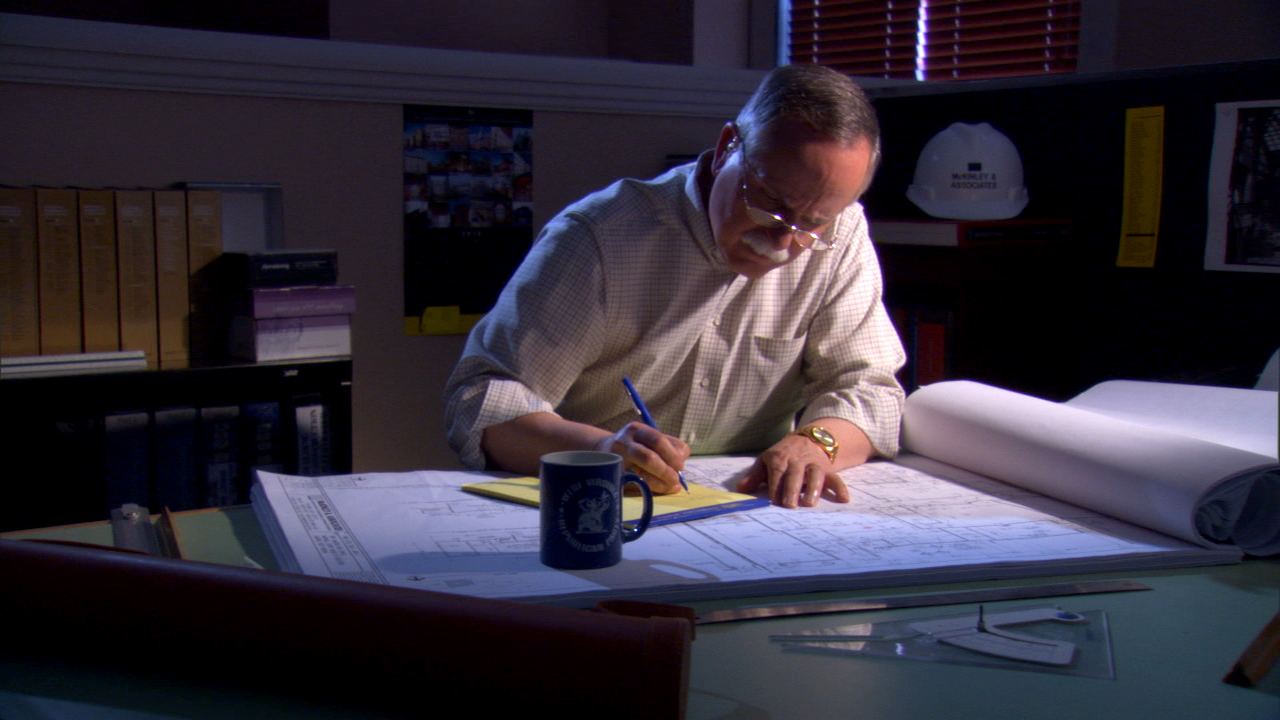
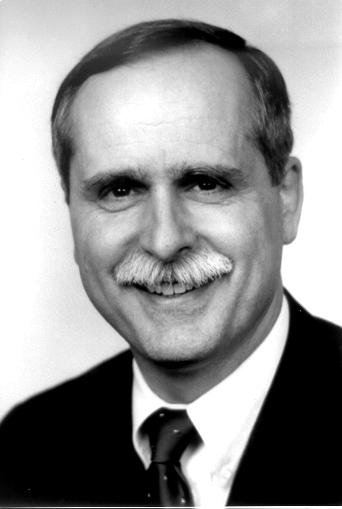
A licensed Professional Engineer, David B. McKinley was an accomplished businessman with four decades of engineering and management experience.
From 1971 until 1973 David B. McKinley worked with his father on civil engineering projects in the tri-state market. He then rejoined the construction company with which he had worked from 1967 until joining his father and stayed with that firm as Vice President of Engineering until 1981. In that year he started his own practice in engineering, called McKinley Engineering Company. Several years later the company was incorporated under that name with his wife Mary as an officer; and then later in the 1980’s, once the company began including architectural services, the name was changed again to McKinley & Associates, Inc.
In his 30-plus year career as President of West Virginia’s largest engineering and architectural design firm, he had been involved in $1.2 billion in construction projects. McKinley built a reputation of pragmatic and economical solutions to design problems. He had a wide range of experience with institutional, commercial and industrial projects.
During his tenure at McKinley & Associates, David also held several professional positions, such as the National Society of Professional Engineers’ National Director for WV, WV Society for Professional Engineers’ State Director for Engineers in Private Practice, President of the WV Society for Professional Engineers Wheeling Chapter, as well as being a member of Professional Affiliate AIA, American Concrete Institute, and American Society of Civil Engineers.
Some of the many awards and honors that David – along with his projects – won while at McKinley & Associates, included WV Chapter AIA Honor Award, AIA Merit Awards, Governor’s Award for Historic Preservation, Task Force of the Upper Ohio Valley’s Humanitarian of the Year, WV State Society of Professional Engineers’ Outstanding Young Engineer, West Virginia Division of Culture and History’s Order of the Arts and Historical Letters, and several Historical Building Restoration Awards from civic organizations. The top business magazine in West Virginia had recognized him as one of the 25 most influential people in the state in two consecutive rankings.
David was also a director/member of several local community organizations.
After successfully leading McKinley & Associates for decades, he relinquished ownership of his shares in the company to become a U.S. Congressman representing the State of West Virginia.
Please click here to view his obituary.
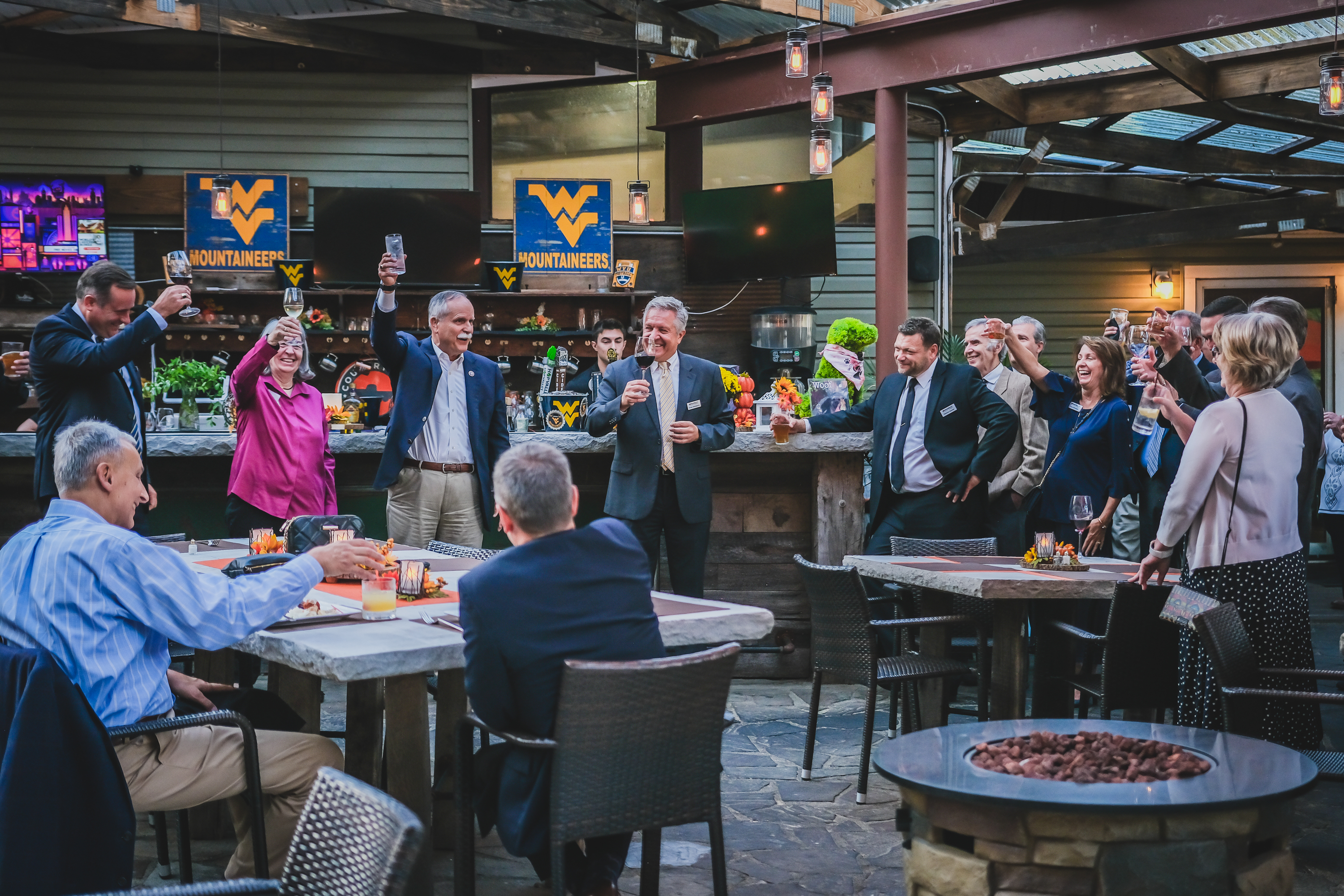
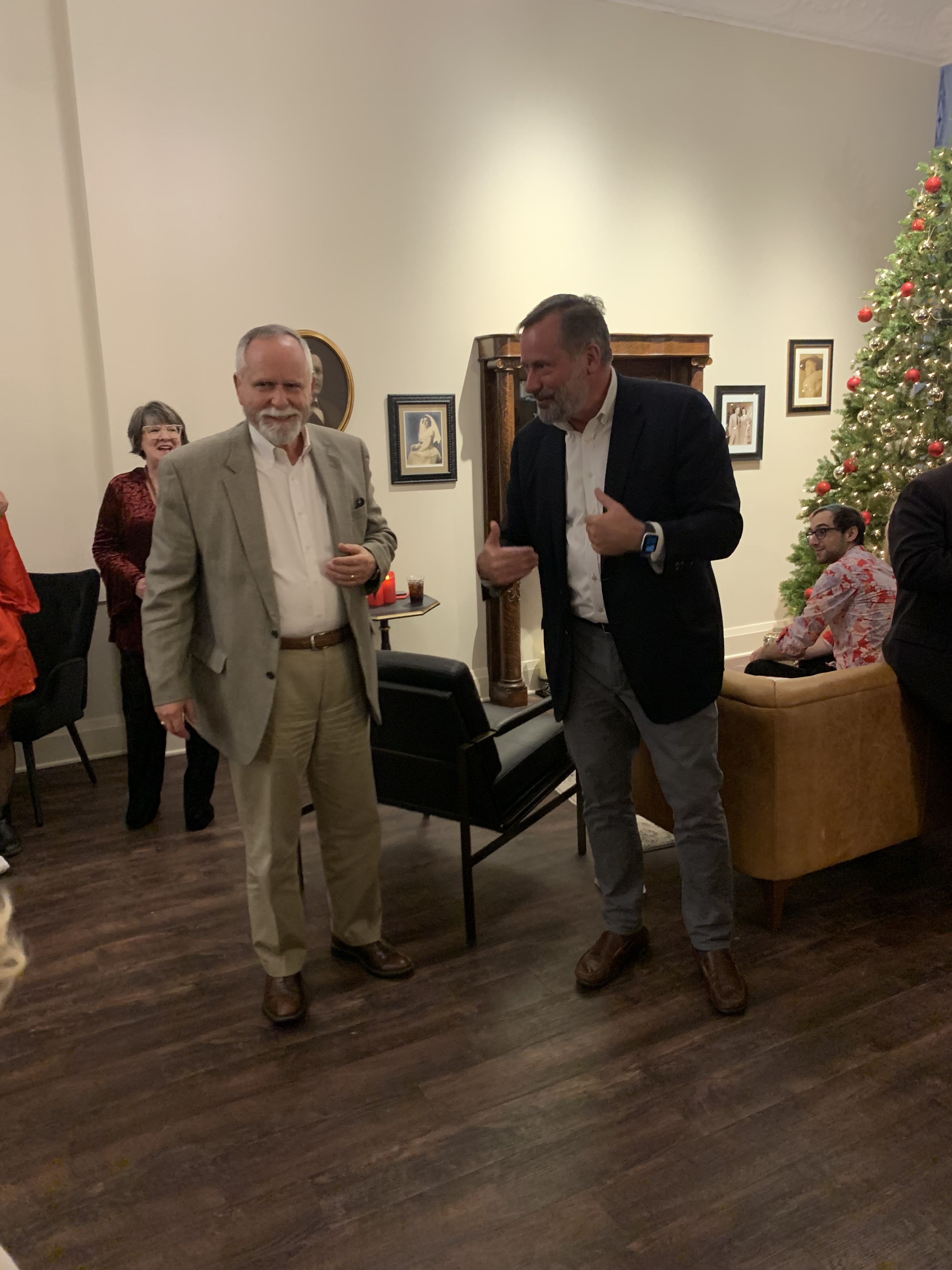
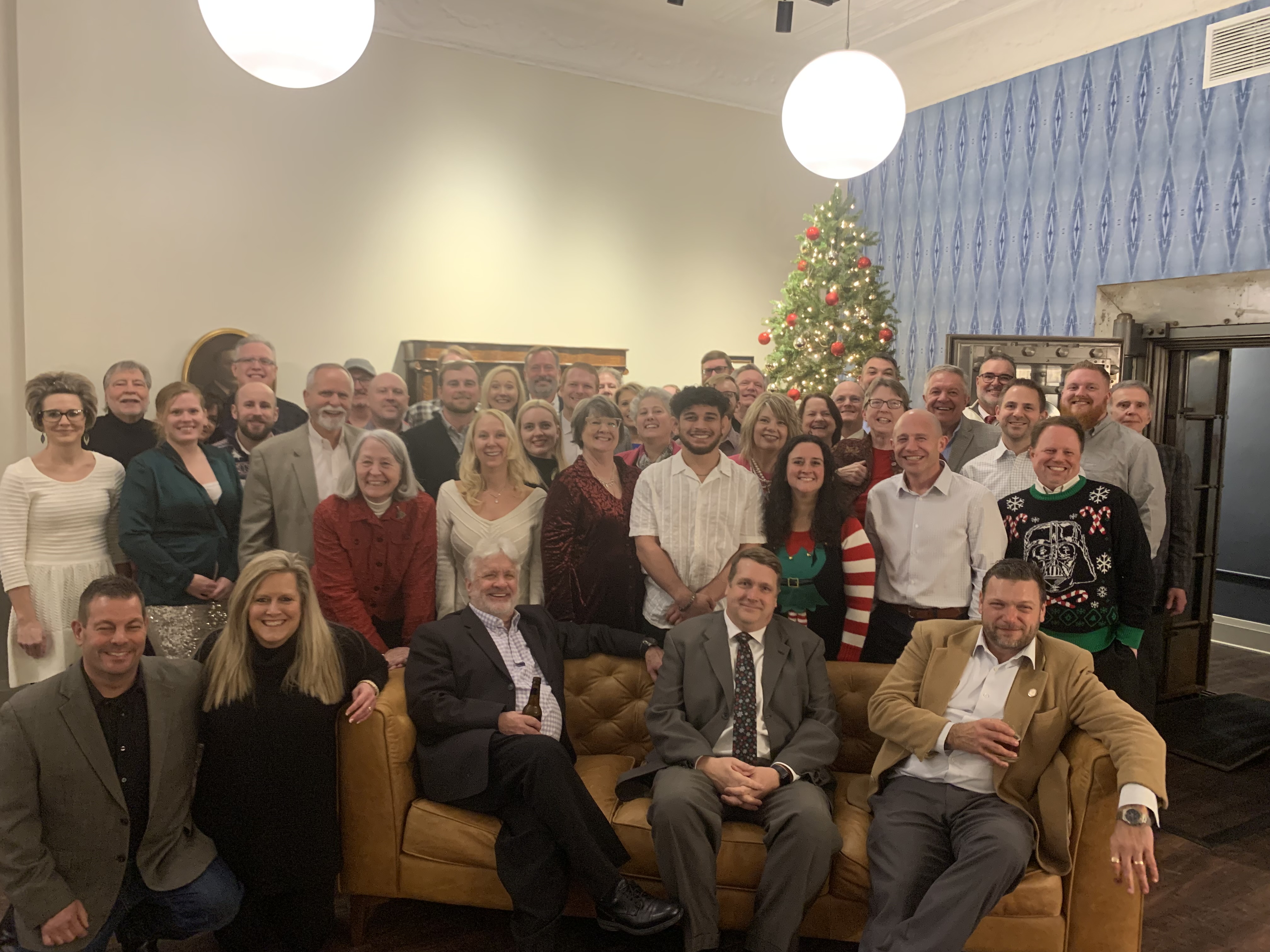
The memorials below highlight the enduring bonds he built with the company’s legacy employees.

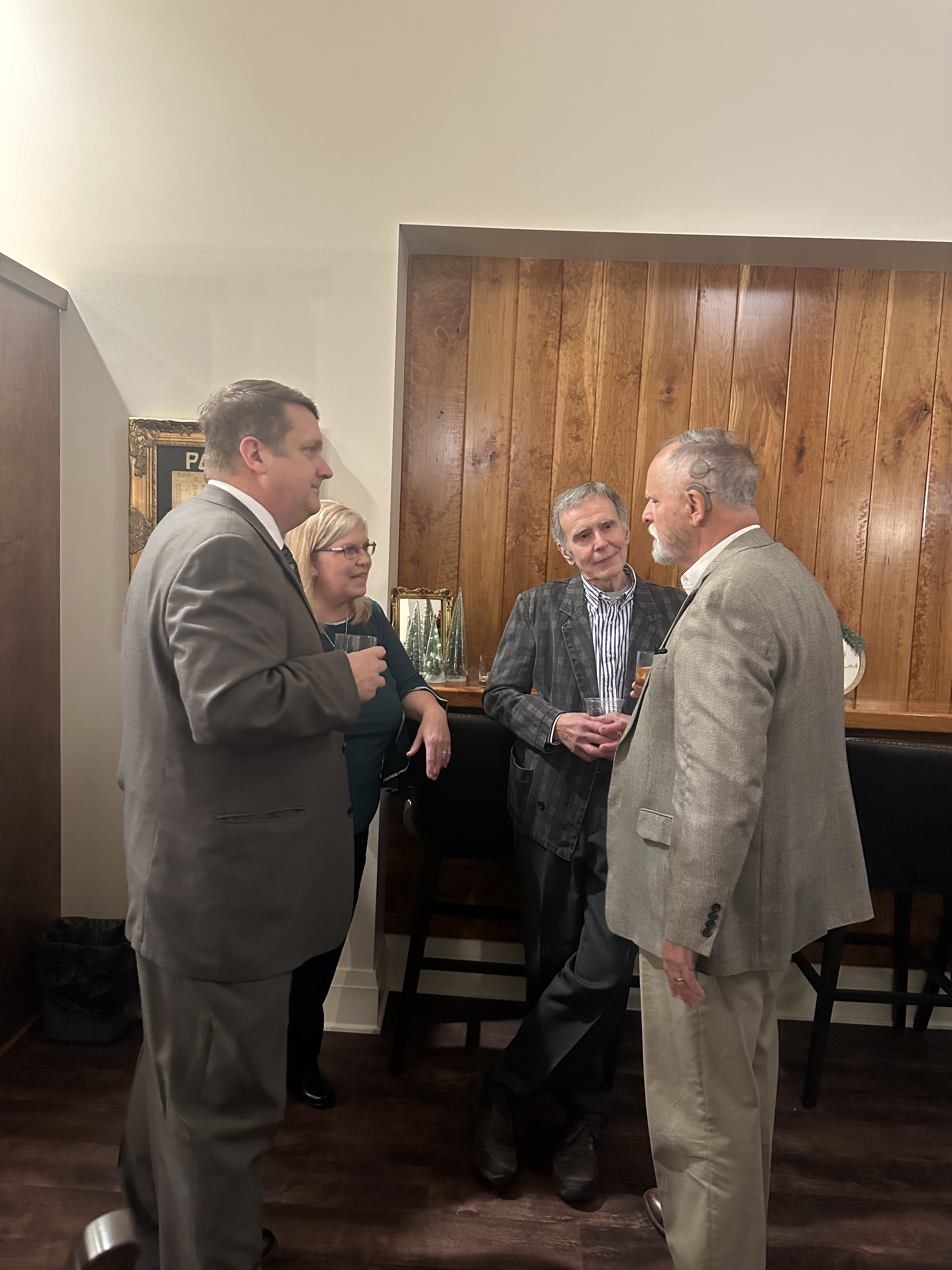
Christina Schessler:
When I decided to take a job in Wheeling, WV I thought I’d be here maybe two or three years and then head back to Pittsburgh as soon as I could. In May I will have lived in Wheeling for 22 years. Growing up people I know in Pittsburgh always referred to West Virginian’s as “Hoopis” meaning hillbillies. I laugh at this now because I am happy to say after all this time that I am a proud “hoopi” and David had a lot to do with my change of attitude.
One of the first projects assigned to me by David was the restoration of Independence Hall. As a preservation architect, I was very excited! What an opportunity! It’s an incredible building. Every Monday morning at our weekly staff meeting we discussed the progress of the design and restoration options because as he liked to remind me in almost every Monday morning meeting we had (he would look me right in the eyes): “it’s the most important building in the State.” I confess that initially after hearing this so many times, that I felt it necessary to actively refrain from rolling my eyes. But that feeling was really just due to my ignorance about the great State of WV. The more I learned about WV and the building; the more I understood. I must have visited that building a 100 times trying to figure out how it was built and how best to restore it. Each detail and each piece of history that I collected only served to reinforce every word shared by David about Independence Hall, so much so that I found myself telling friends from Pittsburgh that I was working on “the most important building in the State”. I like to imagine now that I stood up as tall as possible every time I said it. That man’s enthusiasm for WV was contagious!
David was very engaged in the project through the entire process but also allowed me quite a bit of latitude to achieve the restoration. I appreciate his trusting me to work on something so absolutely important to him.
It could have been intimidating but it wasn’t, he always made me feel good about the work we were doing.
Thom Worlledge:
I want to express my heartfelt condolences to the McKinley family. I understand how painful this is, having lost both of my parents in one year. I had the privilege of working for David for several years, and I admired his commitment to his employees. He kept the Charleston office running even during unprofitable times. He cared about his employees, was determined to retain good ones, and refrained from hiring just to lay them off again when work was scarce. Because of that, we all put in extra effort during busy periods. I also respected him as a congressman; he didn’t blindly follow party lines but voted based on his principles and the best interests of West Virginia and the nation. We need more leaders like him in Congress. He was a good man, an excellent boss, and a dedicated congressman.
If you are like me, you may find yourself wanting to talk to your loved ones who have passed, in those moments, remember that others are keeping David’s memory alive too.
David Carenbauer:
Mr. McKinley was a great boss to work for, and always put his employees first. I enjoyed his wit, intelligence, and his leadership. He dedicated a lot of his life for the betterment of Wheeling and all of West Virginia. He had a passion for history, and saving historic properties. I’m glad I recently got to work with him outside of work, to help illustrate maps on his book about the history of his ancestors; I will always cherish that one-on-one time with him in an outside setting. It was always a pleasure to talk with him, and I will miss him.
Patrick Rymer:
My professional career in an architectural office began with Congressman McKinley—then Mr. McKinley, and later, simply David.
During my interview with Mr. McKinley for McKinley & Associates, I gave my current employer, also a civil engineer, as a reference. David showed both skill and tact by calling him personally about the job being offered. It was not difficult for me or my employer, as we were both well aware of my need to expand my experience. Still, I recall David saying that “it was a pretty hard call to make”—and yet, he made it.
From there, my journey at MKA began. The early years at McKinley & Associates, particularly the Monday morning meetings, were formative. Not only because of Mr. McKinley’s leadership, but also because of the structure he created—one that balanced autonomy with responsibility for its architects. Those were formal days, with button-down shirts and ties mandatory, yet it was a superb environment for an emerging architectural professional. We had the opportunity to spend meaningful time with each of the firm’s architects, each with his or her own strengths and passions.
The ability to make mistakes—and to learn from them—was a core philosophy, even if it was never formally stated. Learning to deal with the inherent imperfections of the profession became a continual lesson in both growth and humility. And while I am certain David held strong opinions, he allowed a permeation of different architectural styles, something I still see as one of the enduring strengths of the firm, then and now.
I mentioned the formality of those early years, but I also witnessed David embrace change. After his first congressional term, stiff collars became less mandatory—even for him—and communication styles softened. That was David: even in his late sixties, still learning. This is something I continue to reflect on—that the person I am today can, while holding on to core values, still change and respond to what is current.
David and I shared a great love for our home state, sometimes even comparing the number of generations each of our families had spent there. We truly lost a great leader and representative. Personally, I lost a friend.
My thoughts are with the entire McKinley family.
Montani Semper Liberi.
Bob Smith:
I greatly respected Mr. McKinley. He was stern yet had a sense of humor. My interview with him will go down as one of my high and low points in my career. I totally bombed the interview and told Ernie afterwards “looks like I’m working for the County” Five days later I received and offer and I’ve been here for 17 years. I appreciated his faith in me and allowing me the opportunity to work at McKinley. God Bless his family.
Tim Mizer:
After working directly for “David B” for over 15 years and being with the firm he created for more than 31 years, I feel honored to have done so. As I finish my career in Architecture and Engineering, he will be the boss I remember most.
David was a staunch businessman. But after all these years, I realize he was firm but fair. David’s main goal with the firm was to see its success, to not put anyone out on the street without a future. He often called the employees “our family”. A family that had members starting families, buying houses, carrying along with their lives. He wanted to give them all confidence in their future, as an employee and as a human being.
David did have his quirks; I guess from his businessman’s mentality. If and when he had to make coffee, he wouldn’t throw away the used coffee grounds, he merely sprinkled a bit of fresh grounds on the old. He would also write messages or corrections of our work so small and in cursive, it would take a while to figure out his intentions. After a while, I was called upon many times by others to figure out the wording. I would comment that he probably wrote so small to save paper.
I consider David B a mentor in areas of design that were new to me. He taught me how to look at structural failures and author the investigation reports, being precise but in terms that anyone could understand. Even though I had had some structural design courses in college, looking at things as a structural engineer was new to me. I learned so much.
He also was a mentor in the way to represent the Firm with a Client, by providing to them what we said we would.
The most I remember about David B is my time alone with him after everyone has already left the office. Mostly at the end of the year, looking back on the year and forward to the new. About the firm and about life. David B was not only a boss or colleague; he was a friend.
Ray Winovich:
I went to David’s office to congratulate him after the first election. We talked politics. I’m a Democrat, son of a working class father, and JFK was one of my childhood heroes. I gave him my prized copy of Kennedy’s Profiles in Courage, and he was genuinely moved by it.
Neither one of us knew then just how prescient that exchange would become. By the end of the decade, Congress had run out of courage. David did not. He voted for what was right, regardless of Party pressure. A man of absolute integrity, he really believed that his constituents and his country were actually more important than parroting Party line just to keep his job. He truly was one of the few remaining profiles in courage.
Lisa DiCarlo:
For me, Mr. McKinley inspired trust and value. In conversation, he would share his knowledge and views and sometimes ask my opinion. If he thought I was wrong, he responded immediately. Other times, he listened thoughtfully, reflecting on my response as if weighing it alongside his own understanding of the topic. Even when his approach challenged my view, he made me feel heard, credible, and respected. I am grateful for what I learned, and the sense of being heard will remain foremost in my memory of him. His love for Mary and his entire family, his pride in his heritage, and his passion for West Virginia and his country were unlimited.
Memory Eternal.
Scott Kain:
David seldom took time away from his work. He did plan yearly time away and looked forward to spending time with friends and family at The Chalfont Hotel in Cape May, NJ.
On the first day of one of these trips, I was walking back from lunch and saw David pull up hurriedly to our office location and jump out of his car. He hadn’t seen me yet walking up the street and I got the surprise of my career. David was wearing a pair of khaki shorts and suede Oxford Buck shoes. Prior to this sighting I didn’t know that he had knees.
I whistled at him and commented about his unexpectedly bare legs. David reached into his car and pulled out a navy blazer and quickly pulled it on while recruiting me to “quickly grab one of the bicycles from the basement and help put on the bike rack”. I laughed and did what I was told but also asked if he felt the blazer counteracted or complimented the shorts.
“Just do it before anyone else wanders by,” he said.
For years afterward, I would ask him if he had sported his school boy uniform lately.
He would scrunch his eyebrows and look over his glasses, the way that most of us can see in our minds eye and say to me “enough!” then smile.
I still smile about this story because it is the only time I ever witnessed David not fully prepared and comfortable in his reality.
David was always present and invested in the people and world around him.
Sean Doyle:
In joining McKinley Architecture and Engineering just over seven years ago, there are so many things for which I am grateful. One thing I could not have anticipated at the time was the opportunity to truly get to know Mr. McKinley.
Over the years, I cherished every interaction and conversation we shared. He always listened—fully and genuinely—and when he spoke, his words offered value, perspective, and encouragement. He had a rare presence: when Mr. McKinley spoke, the room seemed to come alive. His insight provoked thought, inspired ambition, and reminded those around him that what we do—and how we do it—matters.
Beyond his professional accomplishments, what stood out most was the way he treated people. He led with humility, wisdom, and a deep respect for others. He left people better than he found them, often without realizing the lasting impact of his words or actions.
Without question, Mr. McKinley’s legacy will be felt forever—not only in the firm he built, but in the people he influenced, the culture he shaped, and the standards he set for integrity, service, and excellence. We are all better for having known him, and we carry his legacy forward in the work we do every day.