

June 11, 2026
“Architecture in the Age of AI”
Thom Worlledge, Senior Architect, shares his thoughts on Innovation and AI:
What is innovation?
“Innovation is the process of introducing new ideas, methods, products, services, or solutions that create significant positive impact and value.” Ideascale.com
My definition of innovation is “The Process of Positive Disruption”. It involves changing the current solution, product, process, method, or service, thereby disrupting the status quo. The purpose of that disruption, however, is to create a positive outcome: a better solution, an improved product, a more efficient method, or a more comprehensive service.
Disruptions rarely feel positive. They require significant effort and often create stress, with no guarantee of success. In fact, many innovations fail in their early attempts because the effort required to implement change is simply too great.
In 1996, a major automaker introduced an electric car in response to a California Air Resources Board mandate requiring automakers to market zero-emission cars. The car featured a lightweight aluminum frame and an AC induction motor. Despite positive customer response, the vehicles were recalled and crushed in 2003. The company was later labeled the company that “killed the electric car.”
On July 1, 2003, an electric car company was founded by two entrepreneurial engineers. They were inspired to start the company after the recall of all its EV1 electric cars. The founders said they wanted to build “a car manufacturer that is also a technology company.” In 2004, a major investor with a passion for cars joined them. At the time, the company had just five employees. According to that investor, the goal was to create affordable mass-market electric vehicles: begin with a premium sports car for early adopters, then expand into more mainstream models, including sedans and affordable compacts.
The company’s first production car won the Global Green award in 2006 and the Index Design award in 2007, and the company sold 2,450 units. The sports car could accelerate from 0 to 60 mph in approximately 3.9 seconds, had a top speed of 125 mph, and offered a range of more than 244 miles on a single charge. It was a pioneering electric vehicle in both range and performance.
In January 2009, the company delivered only 147 cars and was nearly bankrupt; one website even invited bets on when it would fail. After another round of investment, the company announced profitability in July, driven by the second generation of its award-winning sports car. In 2010, it launched its initial public offering at $17 per share. It later expanded its lineup to include a luxury sedan, a sport utility vehicle, a compact car, and a compact SUV. By 2018, it had become the world’s best-selling plug-in passenger car manufacturer, and its compact SUV was the world’s best-selling car in 2023, 2024, and 2025. Its current stock price is $396, down from a high of $418.
Innovation does not always require an entirely new idea; it can also mean applying existing technology in a different way or using it to reimagine an old idea. Consider a retailer that once sold directly to the public through a catalog. Customers could browse the catalog, place an order, and have it delivered to their homes. The company sold everything from household goods to entire houses. It later expanded by opening catalog stores where customers could browse merchandise. In 1906, it became the first major U.S. retailer to offer stock through an initial public offering and was once considered the world’s largest retailer. In 1993, it discontinued its catalog and shifted to a large-store model.
In 1994, a businessman left his job to start a small online bookstore. When the company went public in 1997, its stock opened at $18 per share. Its slow growth during the first five years concerned some investors.
In 2018, the brick-and-mortar retailer filed for bankruptcy, closing all but 700 of the 3,500 stores it once operated at its peak. Its assets were sold, and the final store closed in 2025. Meanwhile, the online bookstore evolved into a full-service retailer offering one-day delivery on a wide range of products, including groceries. In 2018, the company generated more than $258 billion in e-commerce sales and was growing 29.2% year over year. That same year, it opened grab-and-go retail stores and expanded to 3,000 locations by 2021. In 2026, it closed all retail locations to refocus on direct-to-customer sales and delivery services. Its stock reached a peak of $258 per share in November 2025.
What can we learn from these examples? Innovation is essential.
These examples show that innovation rarely begins as a smooth or comfortable process. It often feels disruptive, uncertain, and risky. Yet over time, it reshapes industries, creates new opportunities, and changes expectations. Architecture is no exception.
The architecture profession has changed dramatically since I began my career in 1984. I started by drafting on paper with lead pencils, then moved to ink drawings on layered plastic sheets to avoid redrawing floor plans. While earning my master’s degree, I was introduced to computer-aided design (CAD). After years of working in 2D CAD, 3D modeling tools emerged and eventually evolved into building information modeling (BIM), which creates digital representations of buildings that integrate structure, systems, and finishes and can serve as a digital twin of the building.
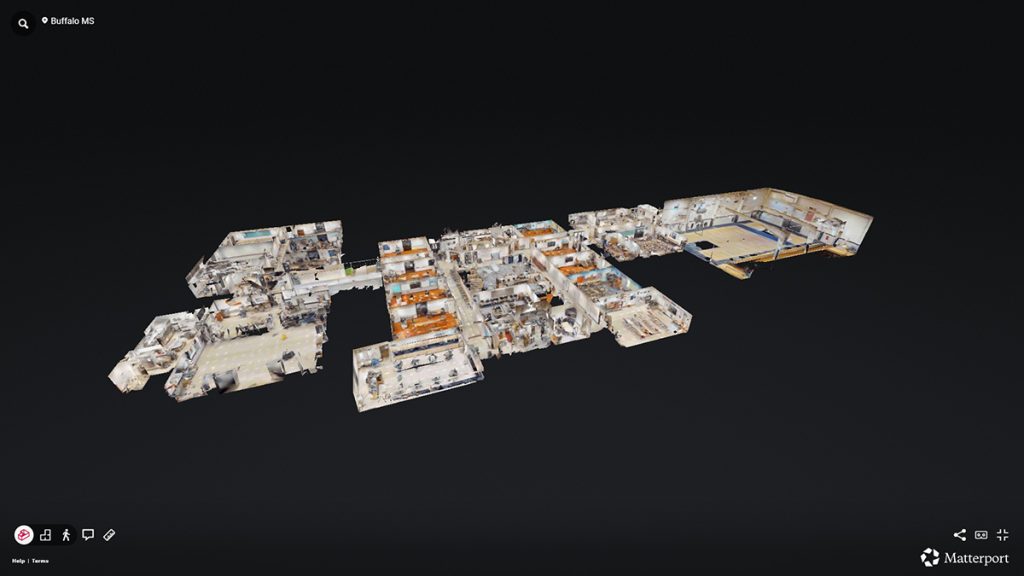
At each stage of that evolution, some architects resisted the new tools, and some feared the profession would eventually be replaced by them. But despite these advances, the core design process has remained largely the same. Technology has made documentation faster and more efficient, yet concept sketching, iterative refinement, systems engineering, and construction documentation still depend on human judgment and expertise.
AI is the latest example. It can generate thousands of concepts and refine them at remarkable speed, leading some to predict that architects will become obsolete. But AI-generated images are still only representations. Architecture is both an art and a complex practice of engineering and construction, requiring solutions tailored to each building’s specific needs. AI can strengthen that process, but it cannot replace the judgment, experience, and problem-solving ability that architects develop over time.
That does not mean AI cannot improve how we work. At McKinley Architecture and Engineering, we use it to bring speed and computational power to our process from beginning to end. Our teams use AI to help move early project ideas into design contracts, develop complex building programs and adjacency diagrams, explore massing studies and concept drawings, and document existing conditions through 3D laser scanning. We have also automated portions of the documentation process, and our specification writer uses AI to draft specifications for unique conditions and check coordination between drawings and specifications. We treat AI as a tool, not a solution. Used thoughtfully, it helps us improve both the efficiency of our process and the quality of our work. AI will not replace architects and engineers; it will make us better at what we do.
Yes, AI was used to improve this article, but it did not write it for me.