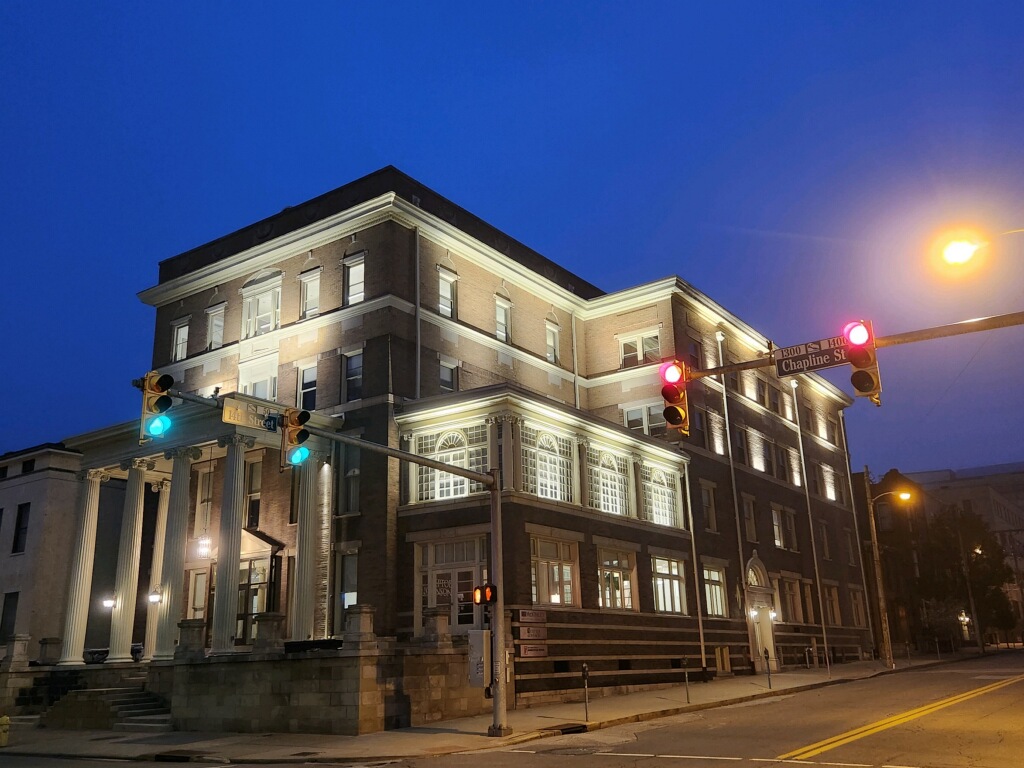
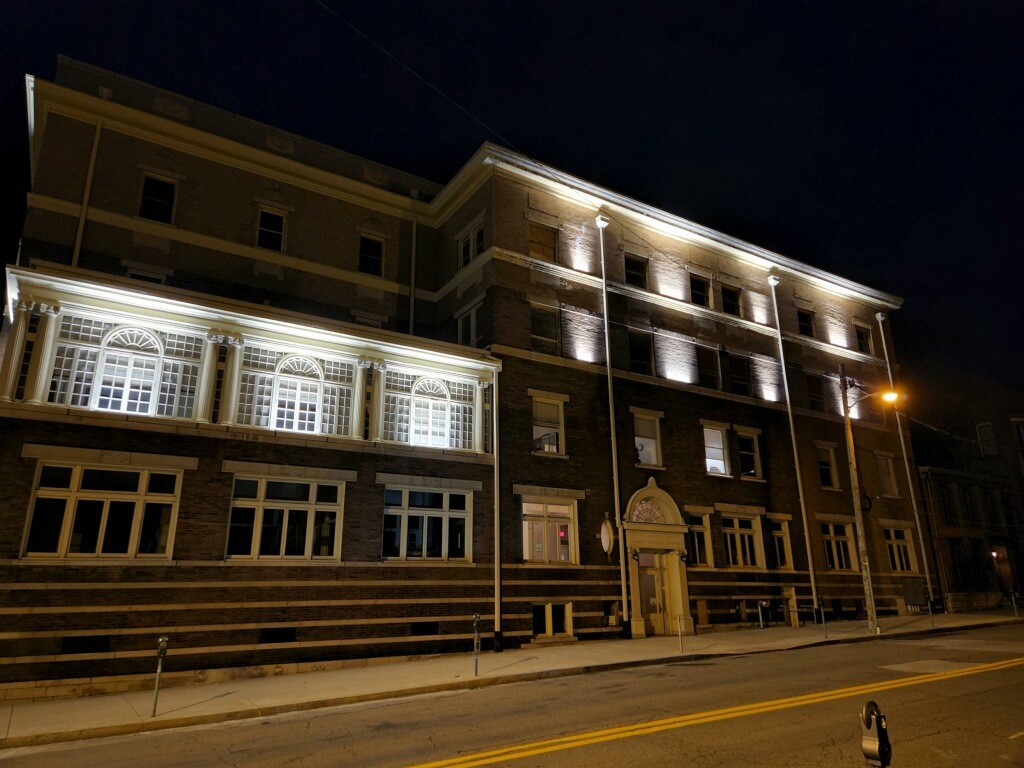
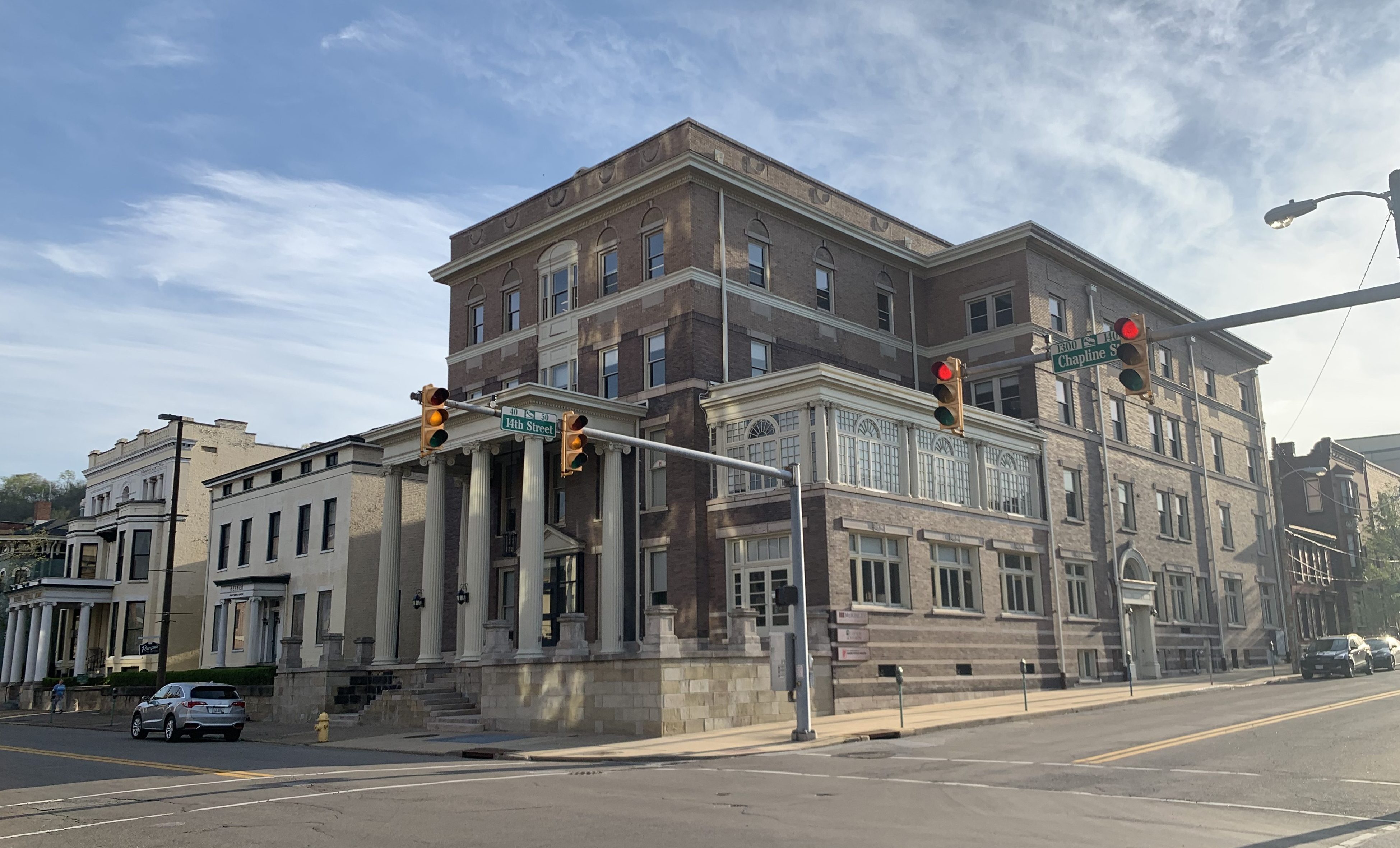
The Fort Henry Building was originally designed and built as a Federal Style mansion in the 1850s for the Howell family. The home was eventually purchased around the end of the Civil War by James Fitzsimmons, and is more commonly associated with this Wheeling Family. Alterations to the interior floor plan and exterior made by Fitzsimmons in the 1880s created a Classical Revival Townhouse, of which very little of the Classical Revival plan remains. Because of its prime location, situated on a prominent downtown corner, the building was later purchased in 1890 to become the home to the budding Fort Henry Club (where it gets its present name).
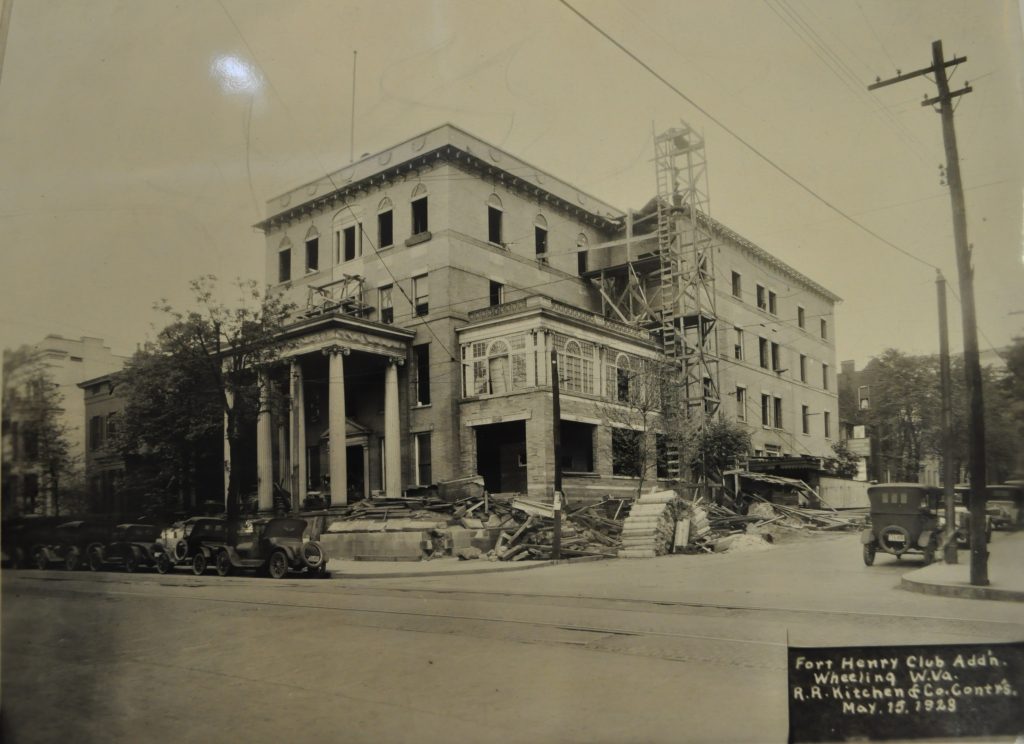
The present heavy Neo-Classical elements at the main entrance are a result of renovations needed after an extensive 1921 fire. Charles W. Bates and Frank F. Faris – well known, local Wheeling architects, designed the renovations and addition creating the architectural image seen today. Except for the entrance, the building exterior was modeled to reflect the original Federal Style. By the late 2000s dwindling membership cast doubt on the Fort Henry Club’s future. It served as a social club and meeting place for local business until it closed in 2010; thereby leaving the building vacant. Its neighbor across the street took ownership in 2011. For more than ten years, McKinley Architecture and Engineering had been working with two of the previous owners; providing design services to create a viable future for the building. However, unable to find a new owner; the owner began taking steps to demolish it. That’s when McKinley Architecture and Engineering saved the day.
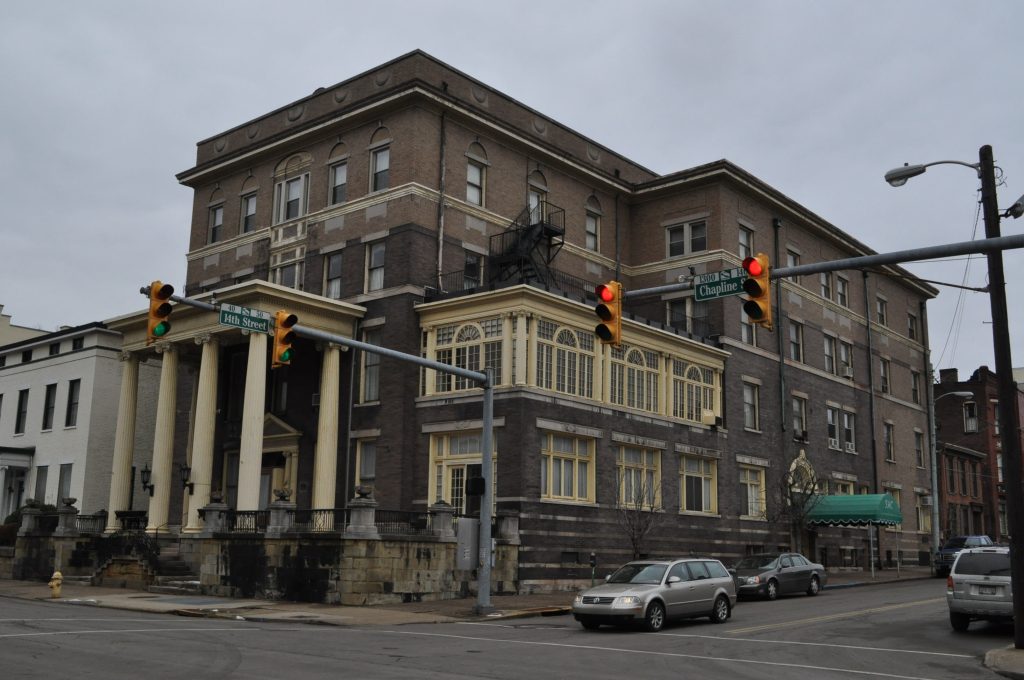
This building is pretty significant to Wheeling, it has historic appeal, and it is located in the heart of the city’s “financial district” between the City-County Building and the Federal Building. Many important people that influenced our national history have walked these corridors; Charles Lindbergh, Babe Ruth, Jimmy Stewart, and President Herbert Hoover are just a few of the names we found in the local history books covering Wheeling.
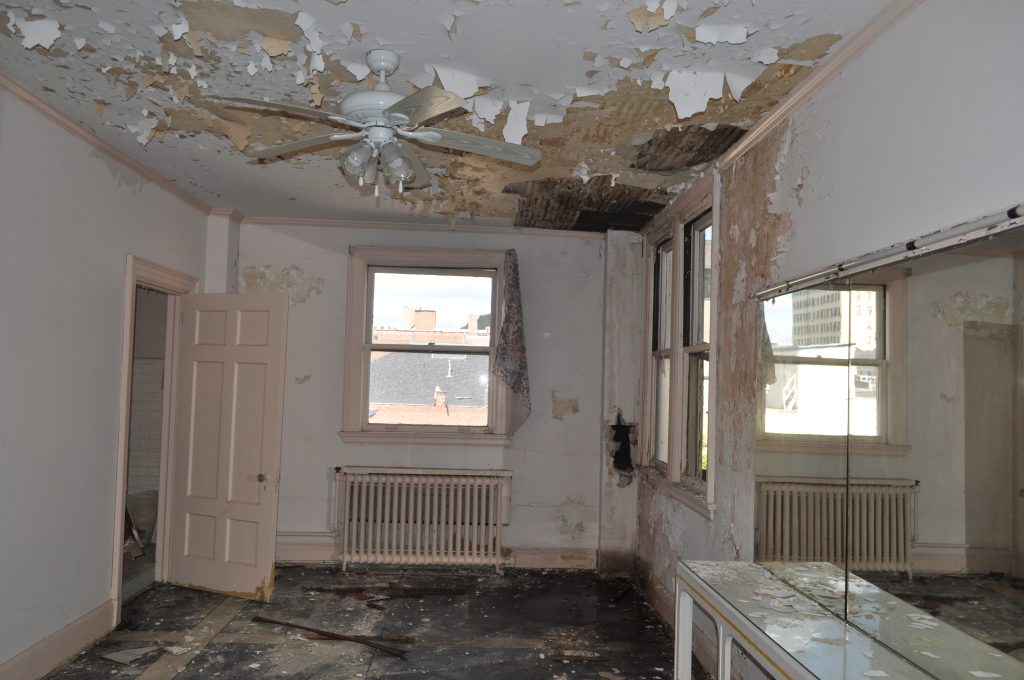
Despite being more than a century old, the building is in good condition. When you look at an old building such as that, you have to determine if it can be saved; this building has strong bones and is structurally sound.
Therefore, we commenced with the development of the project. To date, we have been successful in attracting tenants, and the building is nearly 80% occupied.
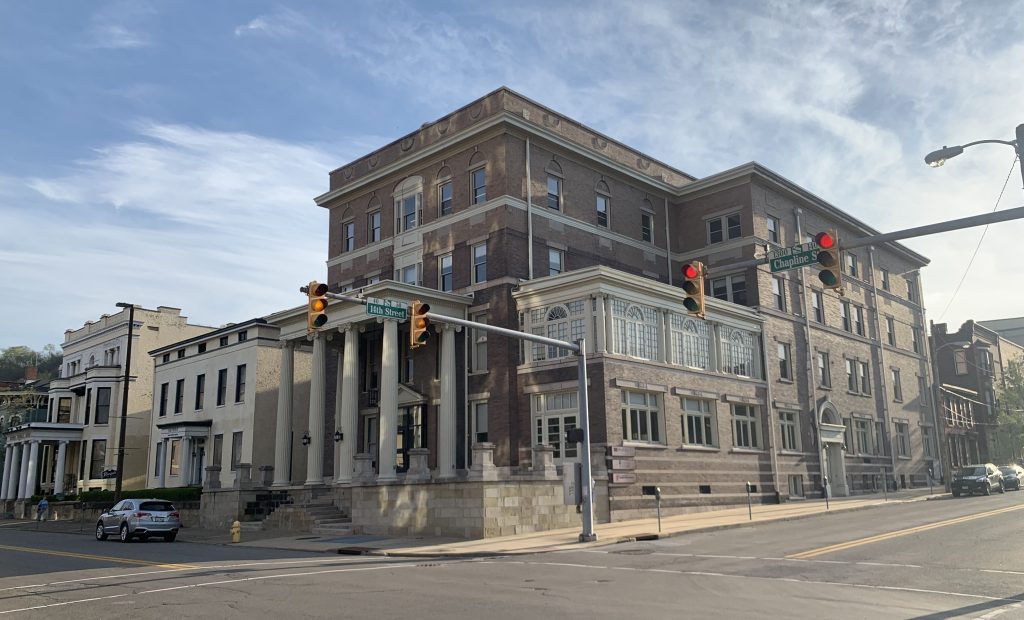
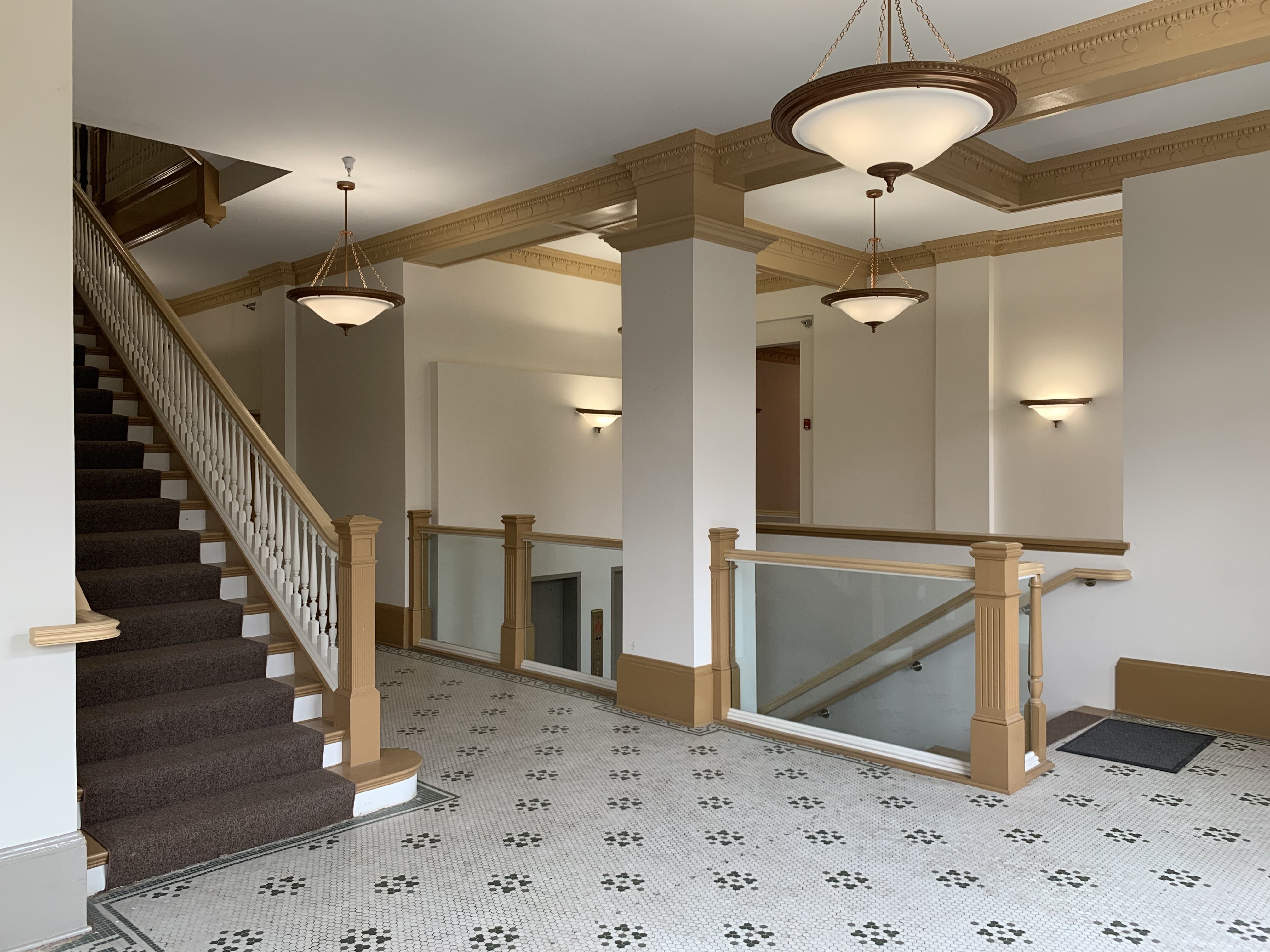
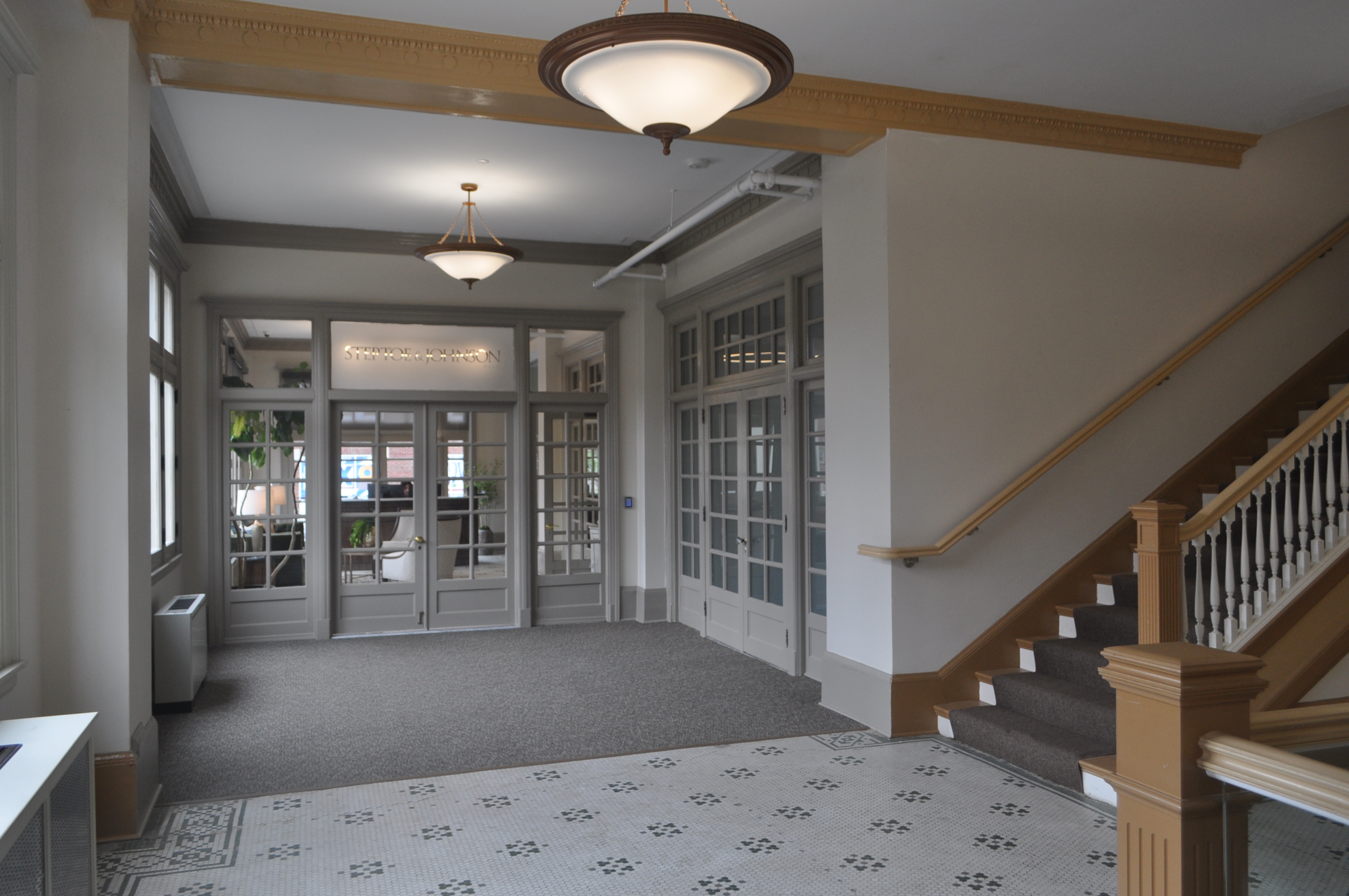
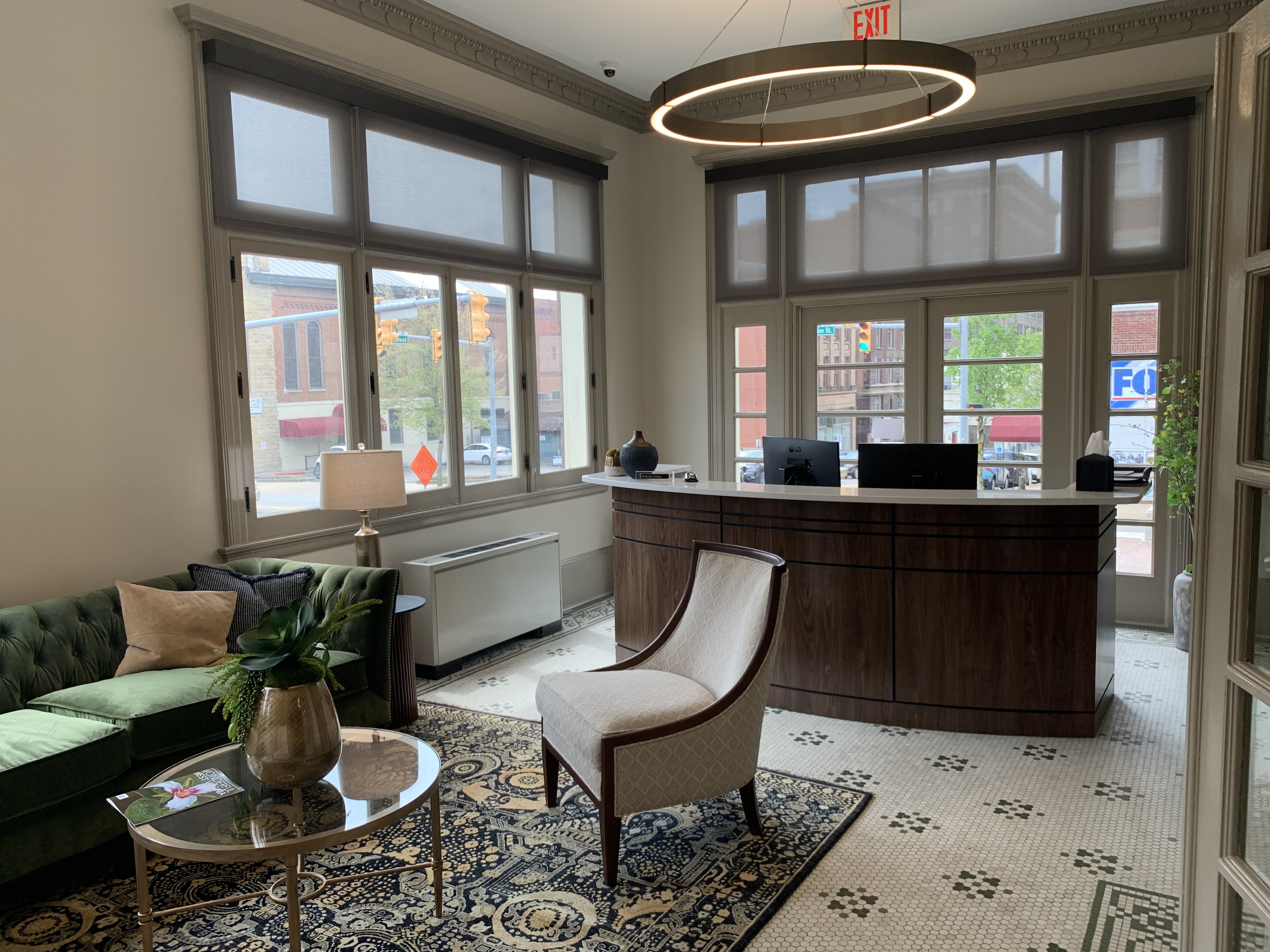
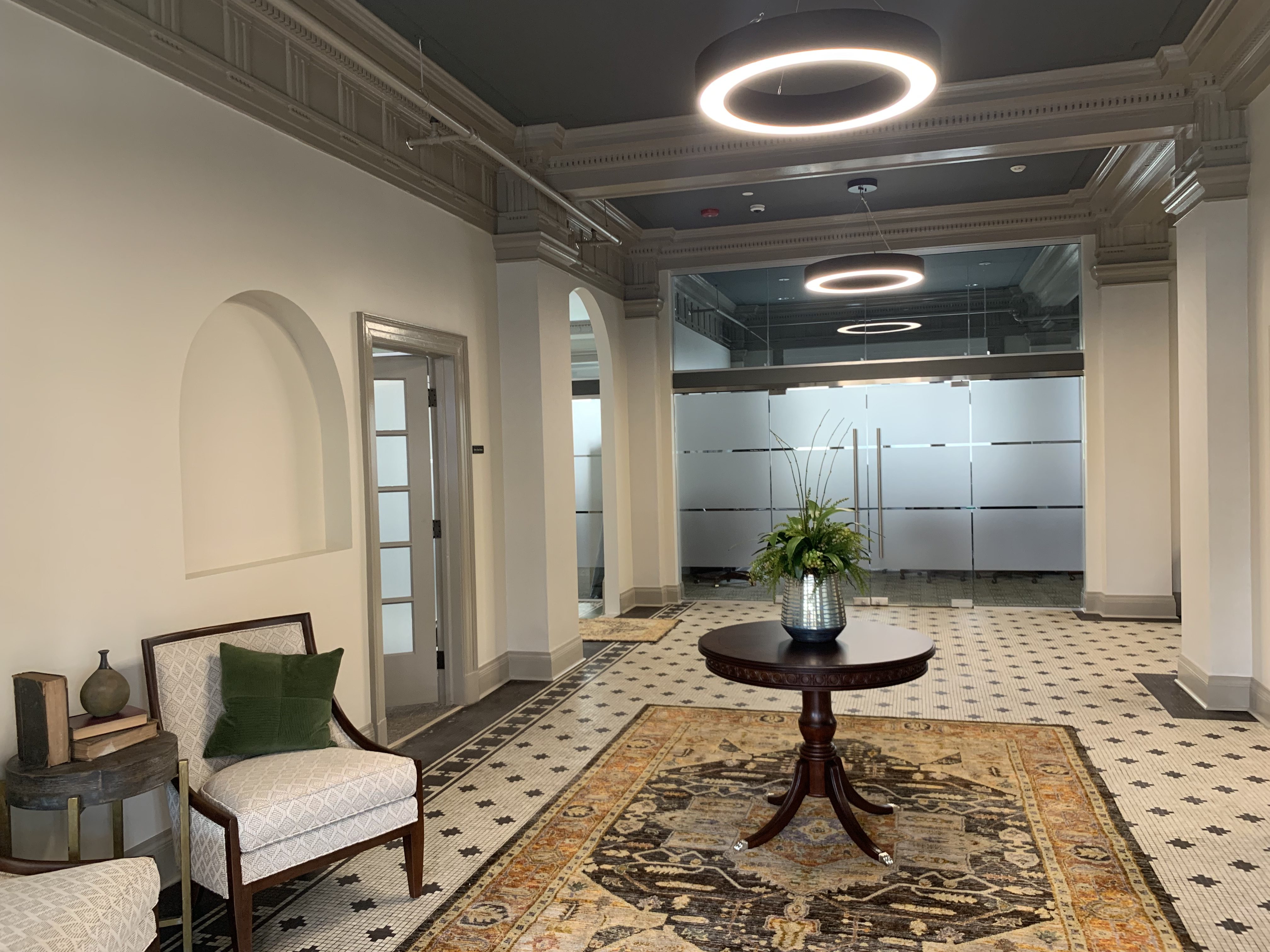
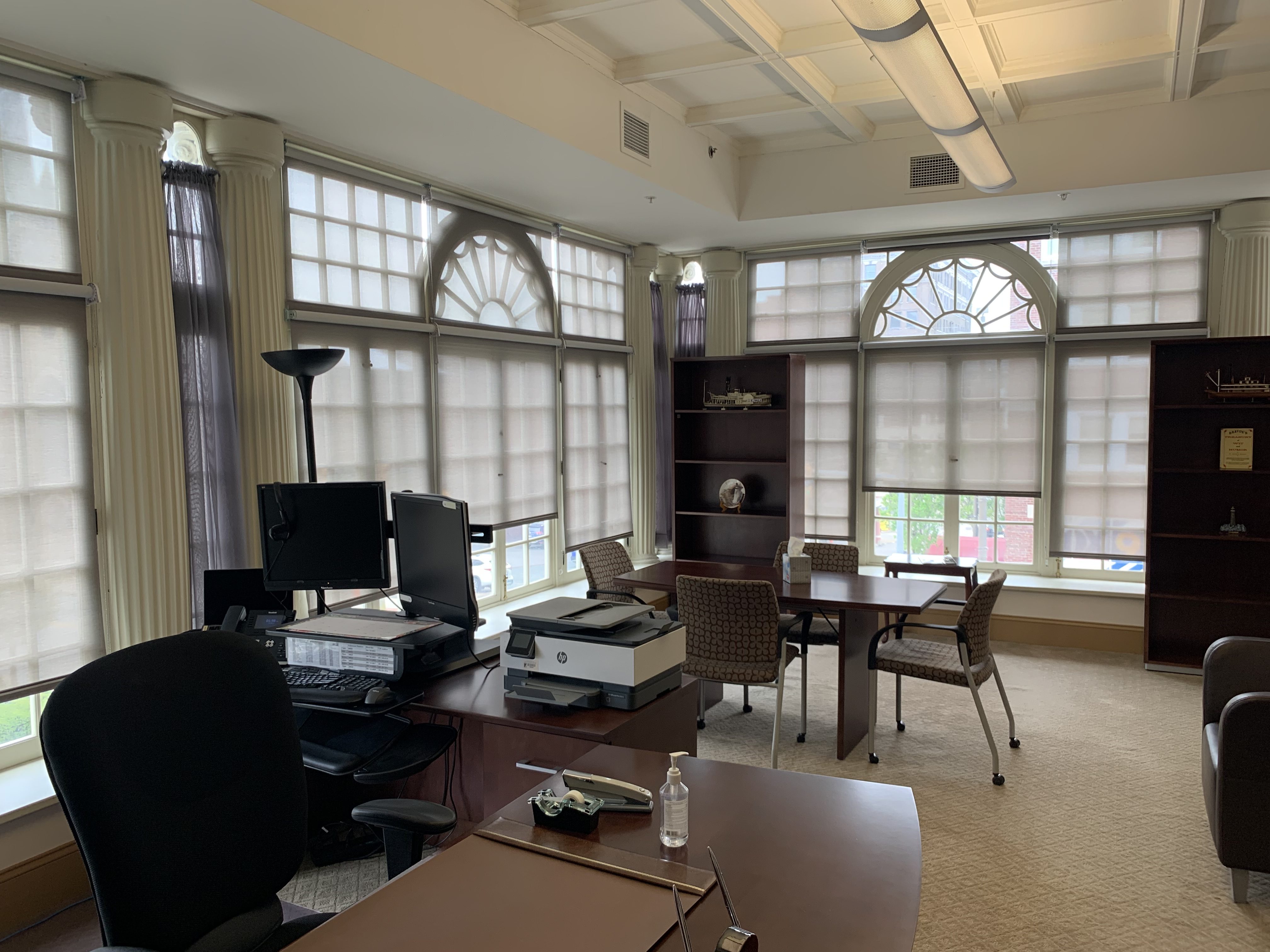
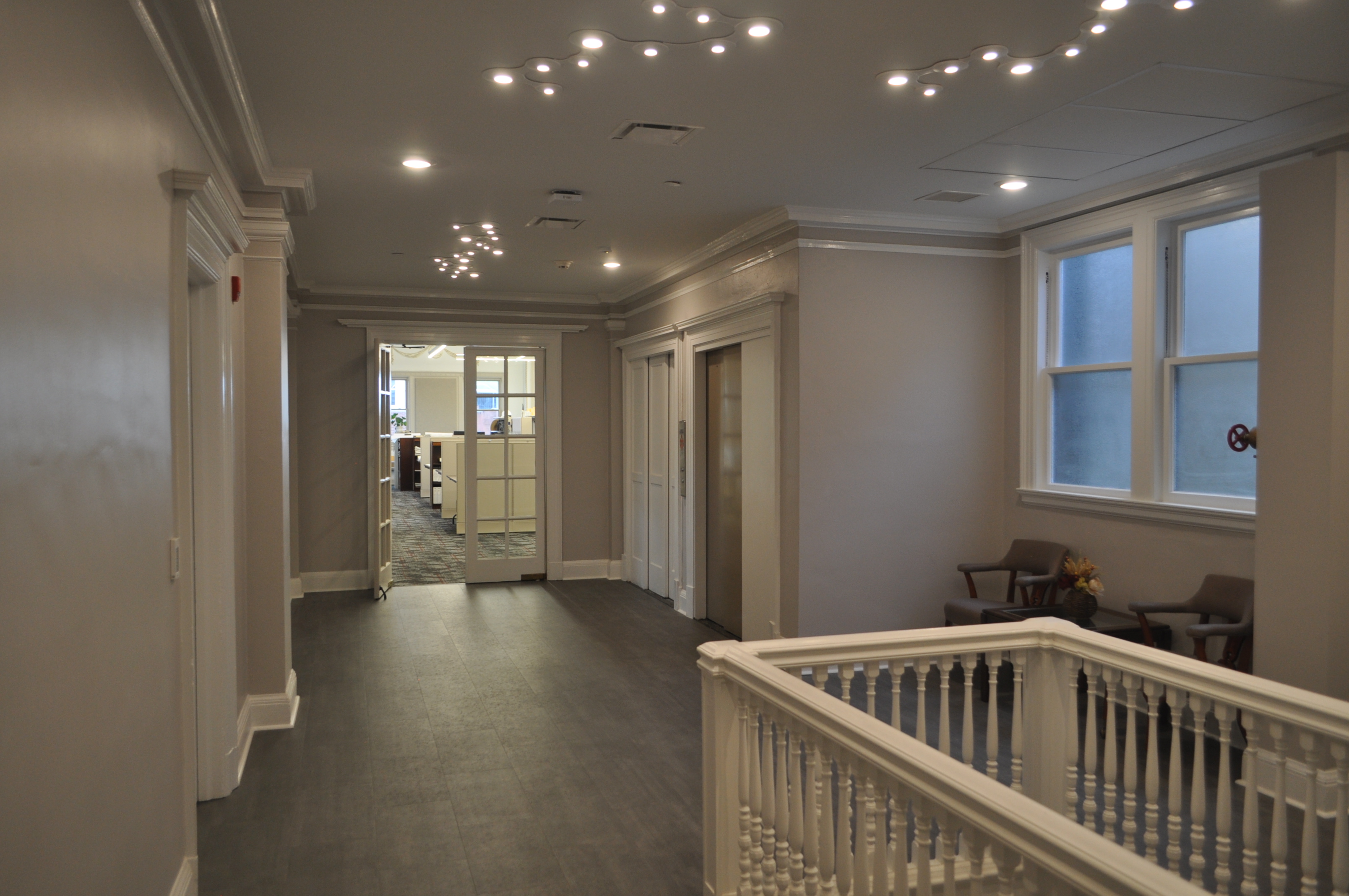
Since the structure is included in the Wheeling Historic District in the National Register of Historic Places (NRHP Reference #: 79002597); McKinley Architecture and Engineering’s goal is to maintain the historic character of the interior and exterior by retaining any historic fabric, mouldings, finishes, windows, door frames, stone and masonry, etc.
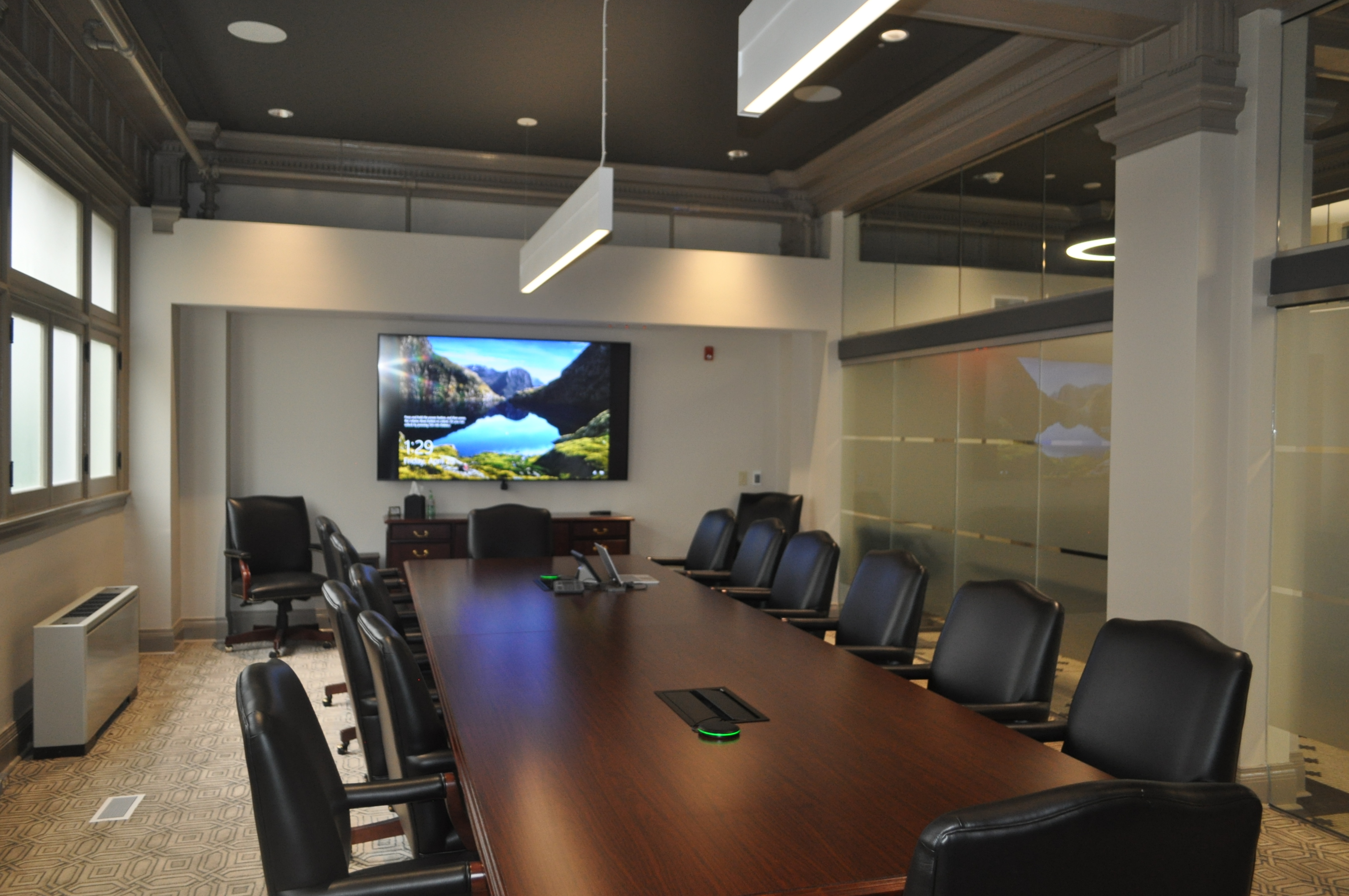
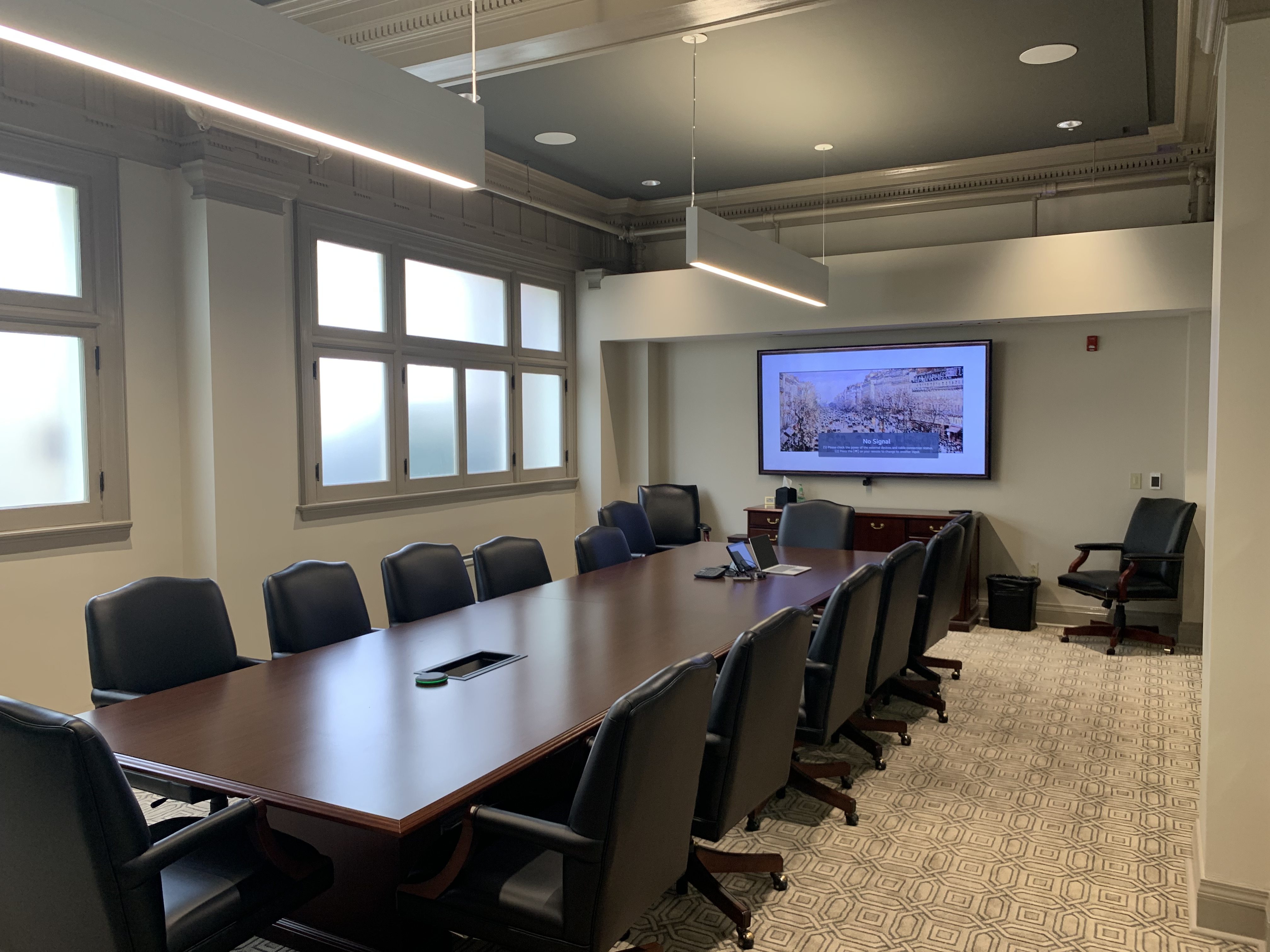
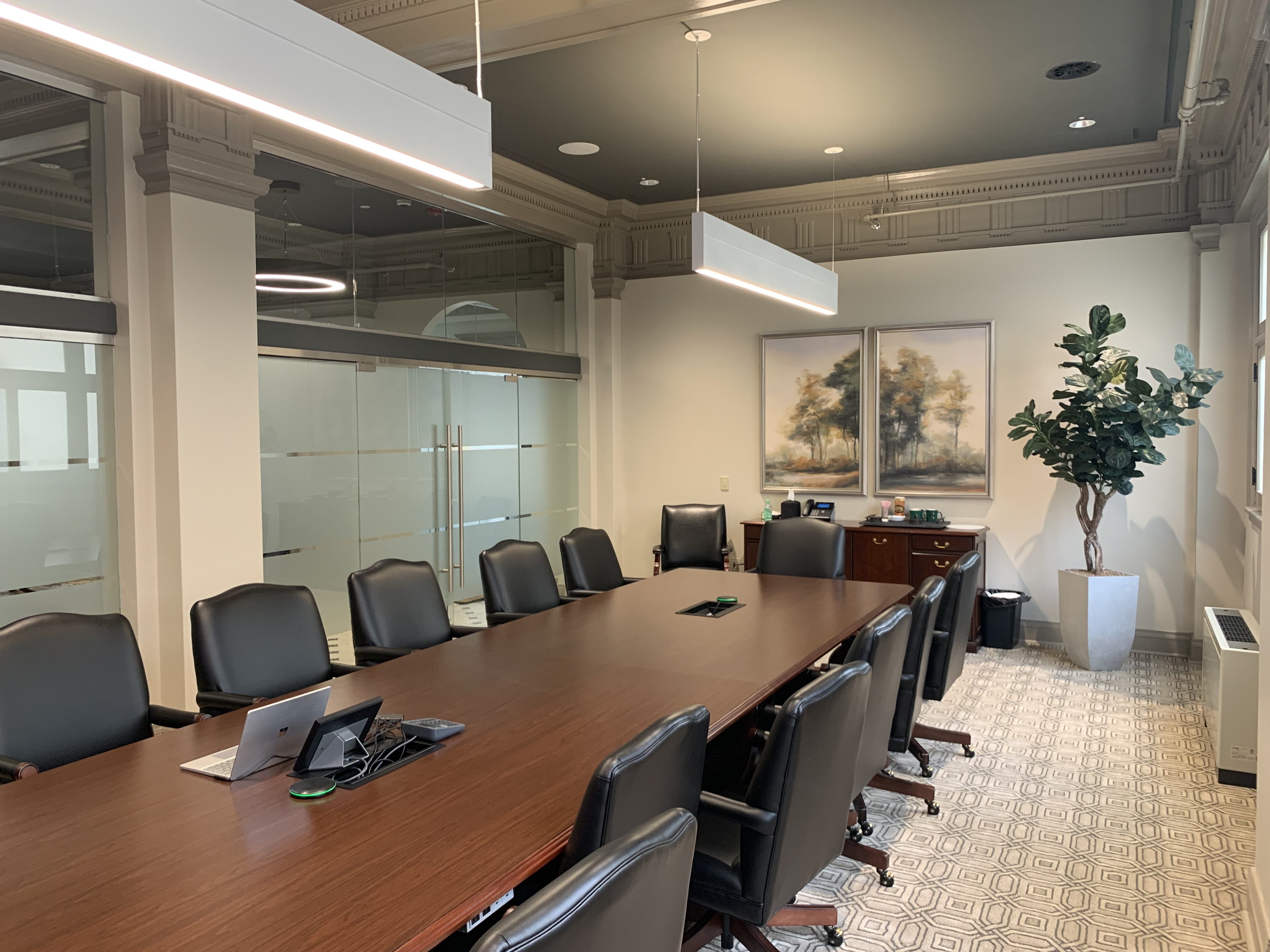
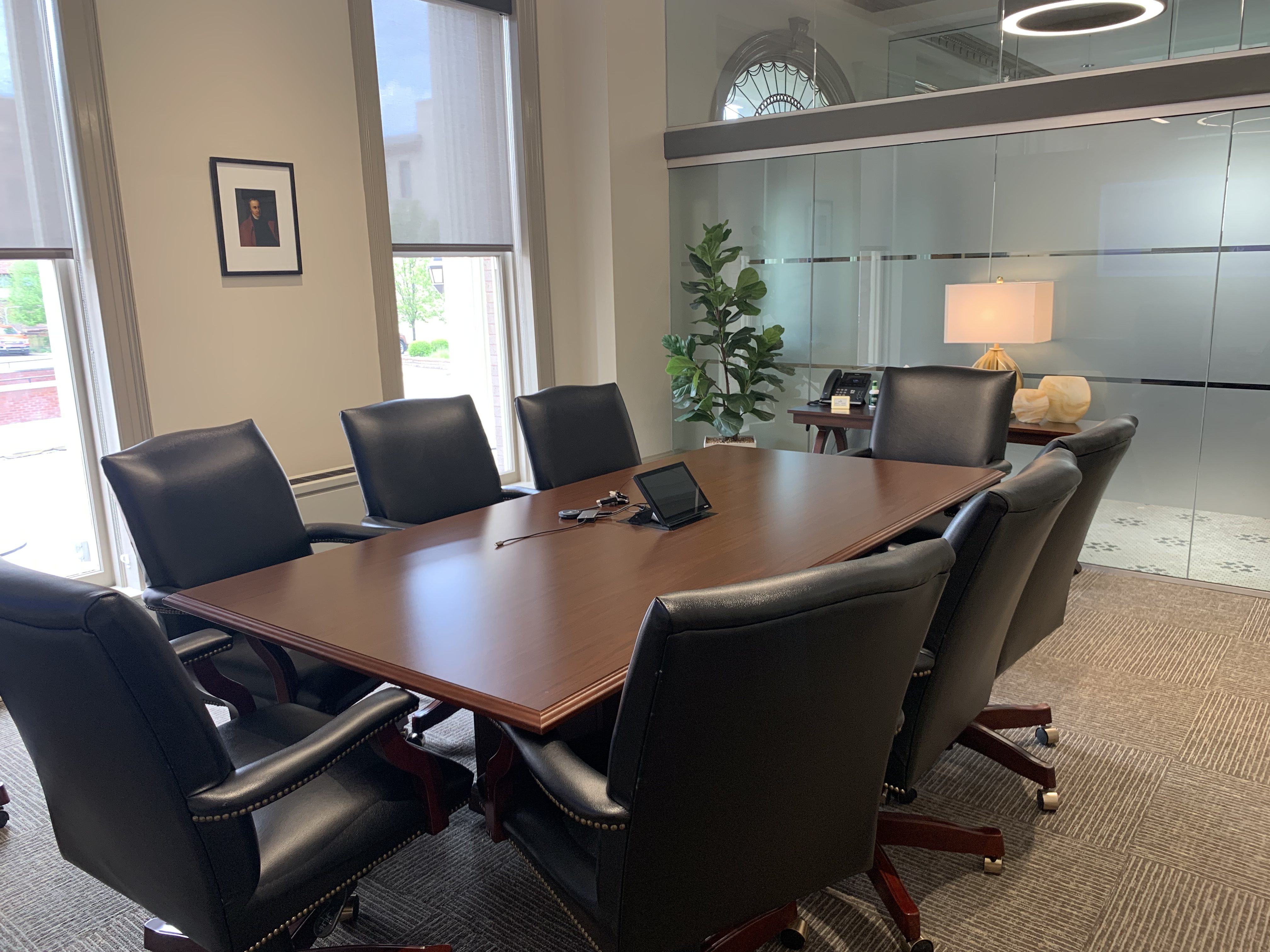
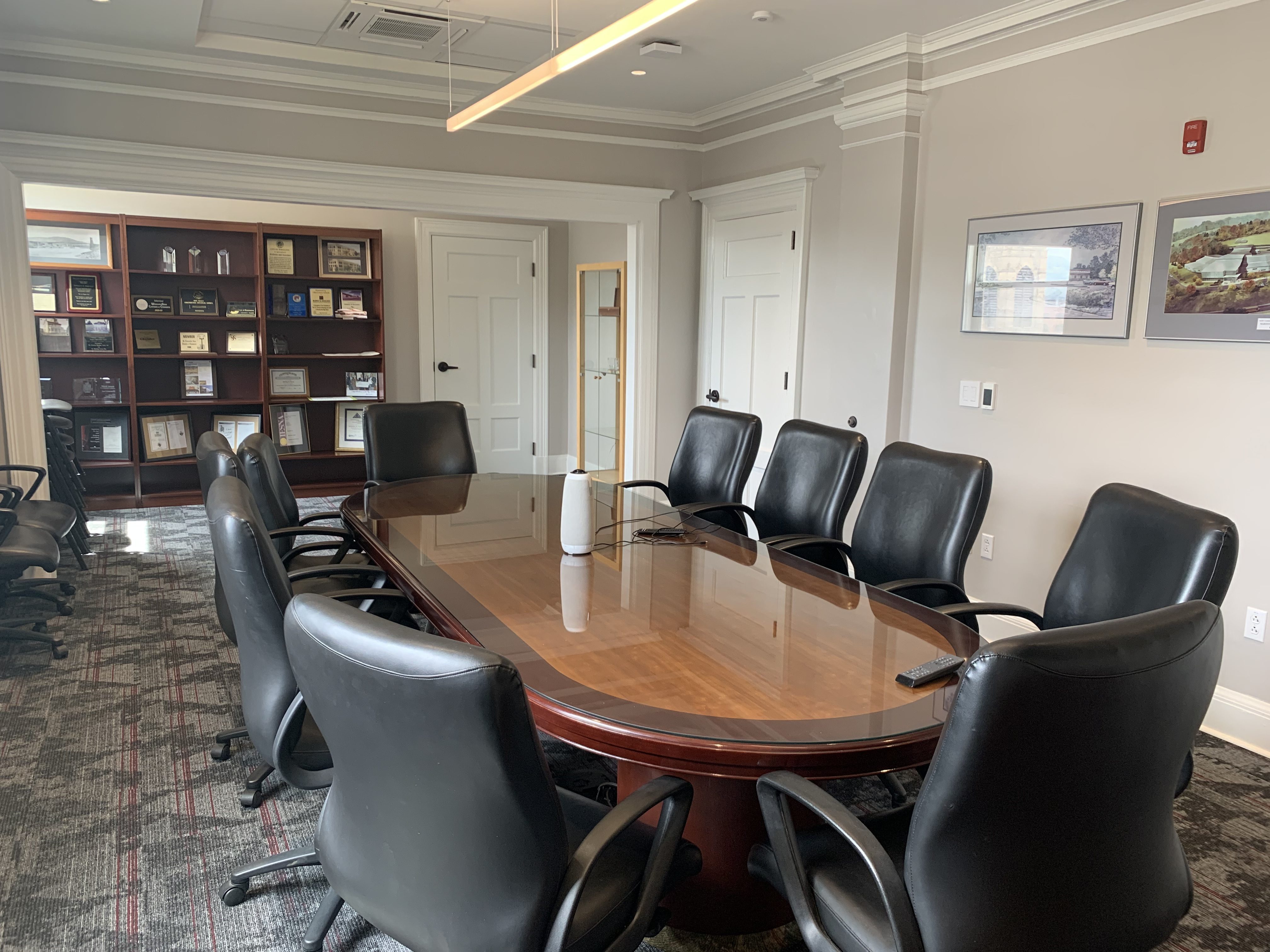
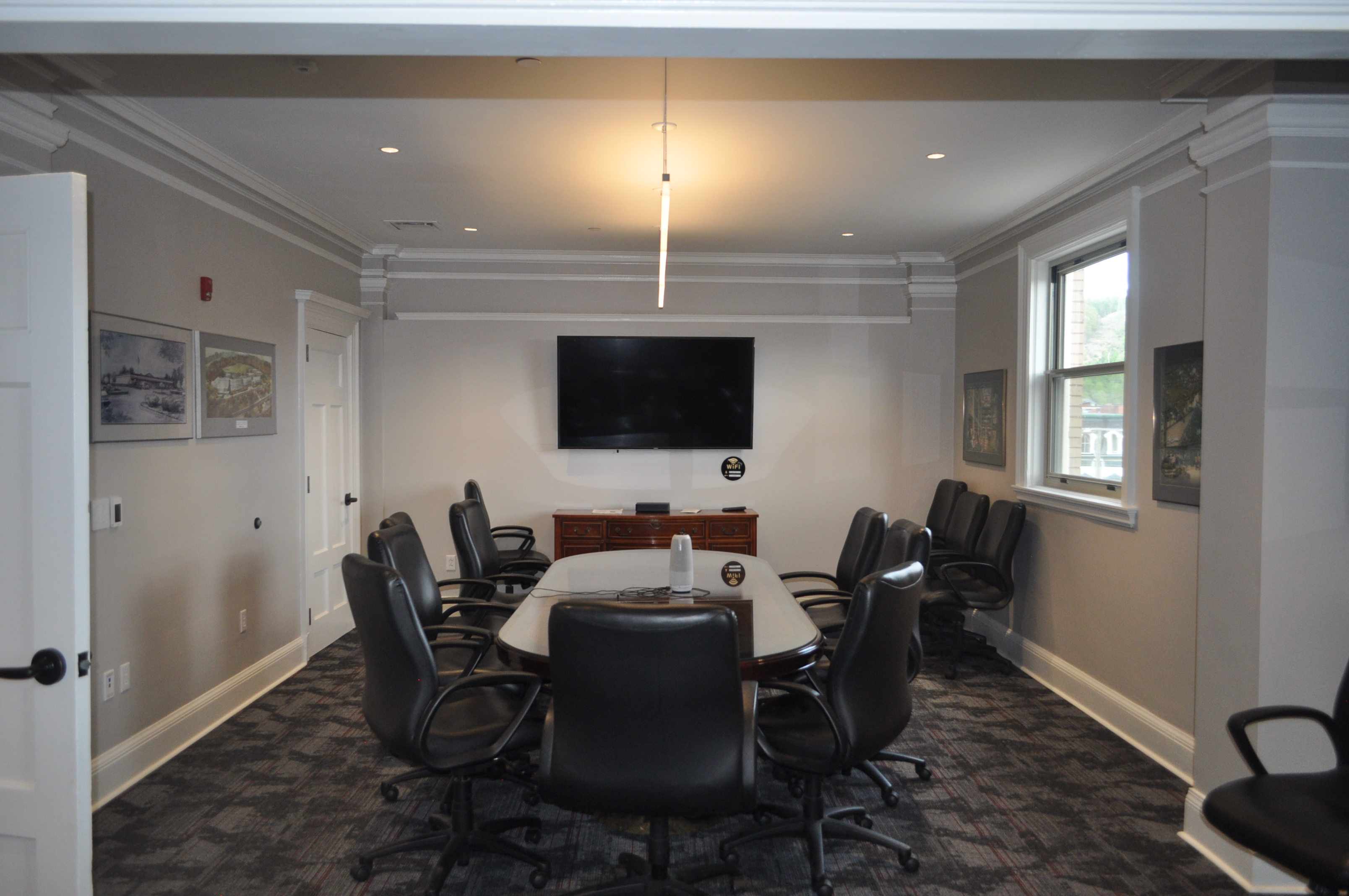
Because the 4 story building had been in disrepair for many years, these build-out renovations include upgrades required to get the building up to current codes and standards, ADA lobby entrances, windows rehab/replacement, masonry repairs, porch restoration, new HVAC, electrical service, plumbing, sprinkler & fire alarm systems, roof replacement, new elevators, storm & sewage line separation, sidewalks, and much more. The tenant space renovations included office build-outs, work areas, conference rooms, restrooms, kitchenettes / break rooms, lobbies, data systems, and storage, among other scope.
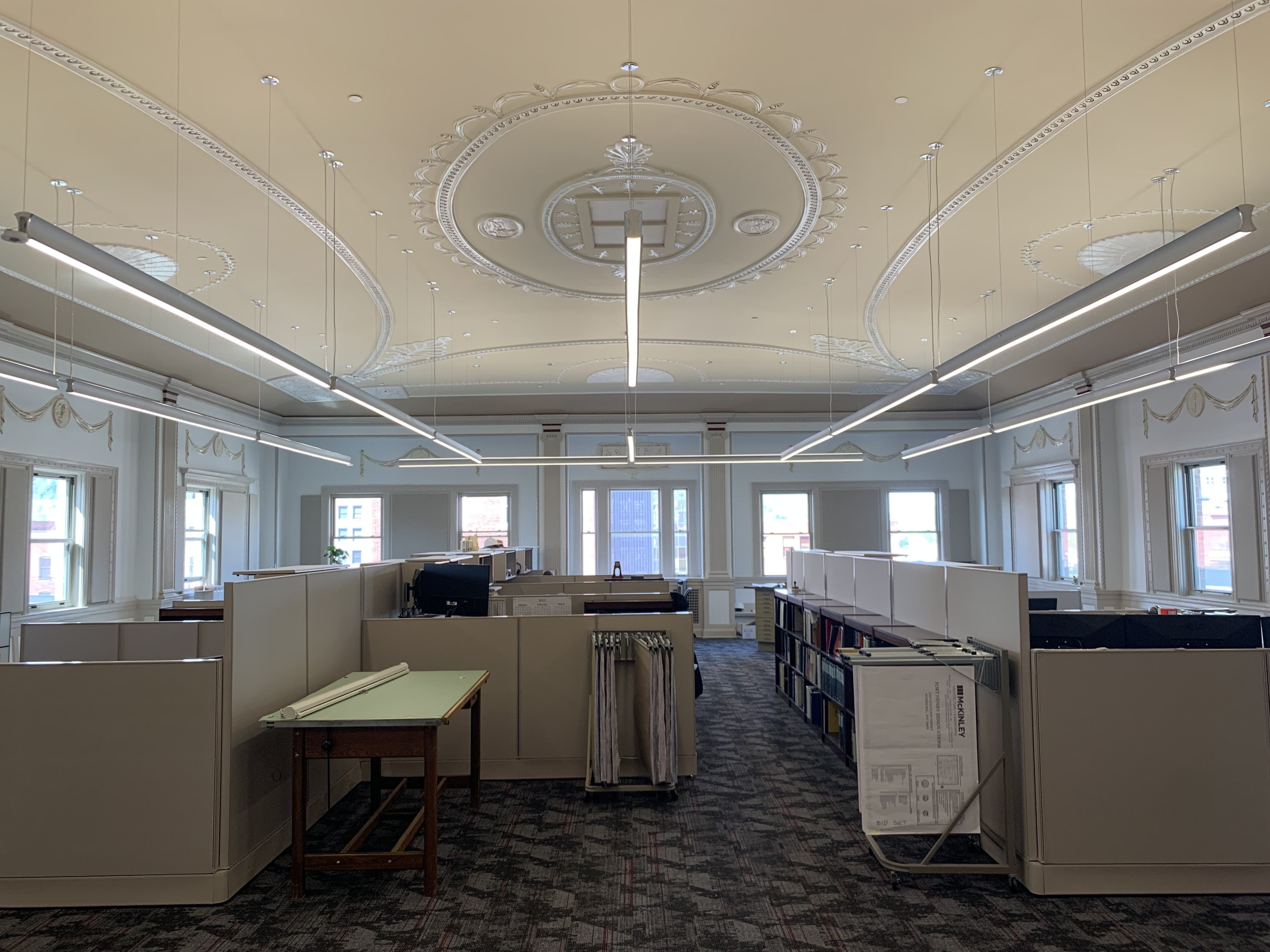
We also converted the 4th floor formal ballroom into a work area, and a surprise that was uncovered was that hidden above a suspended drop ceiling was the original 1920 domed plaster ceiling with intricate detail including seashells, flowers, angels, medallions, sphinx, and bas-relief. We restored this ceiling to showcase its original magnificent ambiance.
All of the renovations comply with the United States Secretary of the Interior’s guidelines for historic preservation and restoration. By complying with this standard, we maintain the historic character and integrity of the architecture and history of the building. This approach also provides the benefit of historic tax credits which are an important funding mechanism for the development. The building has produced several inquiries for available space, and we continue to work with those prospective tenants.
The City of Wheeling recognized our commitment to our faith in the City and the revitalization of downtown Wheeling, and former Mayor Andy McKenzie presented us with a plaque during his “State of the City” address in 2016.
Historic Preservation / Rehabilitation, Adaptive Reuse, Commercial / Office
Wheeling, West Virginia
45,046 SF