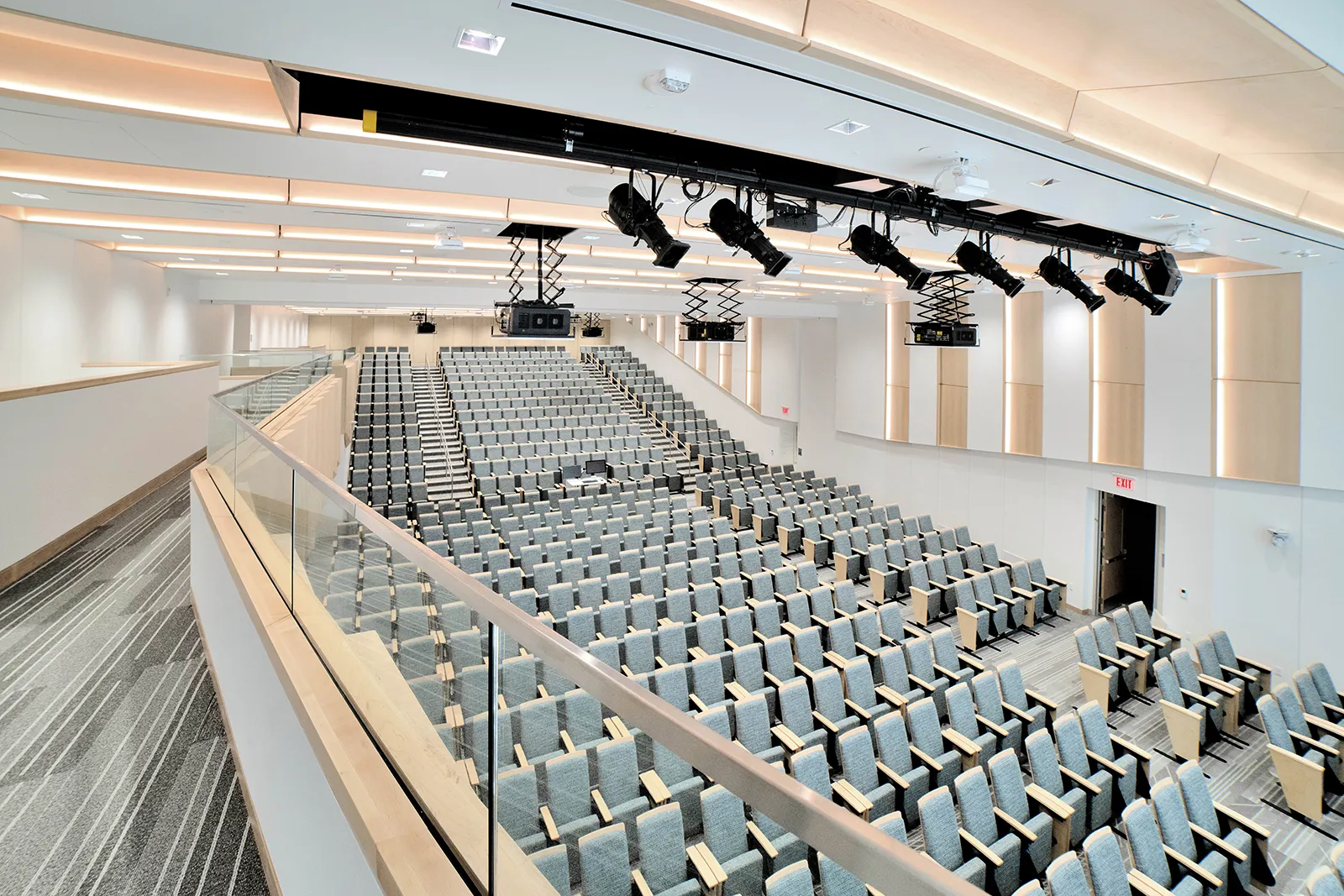
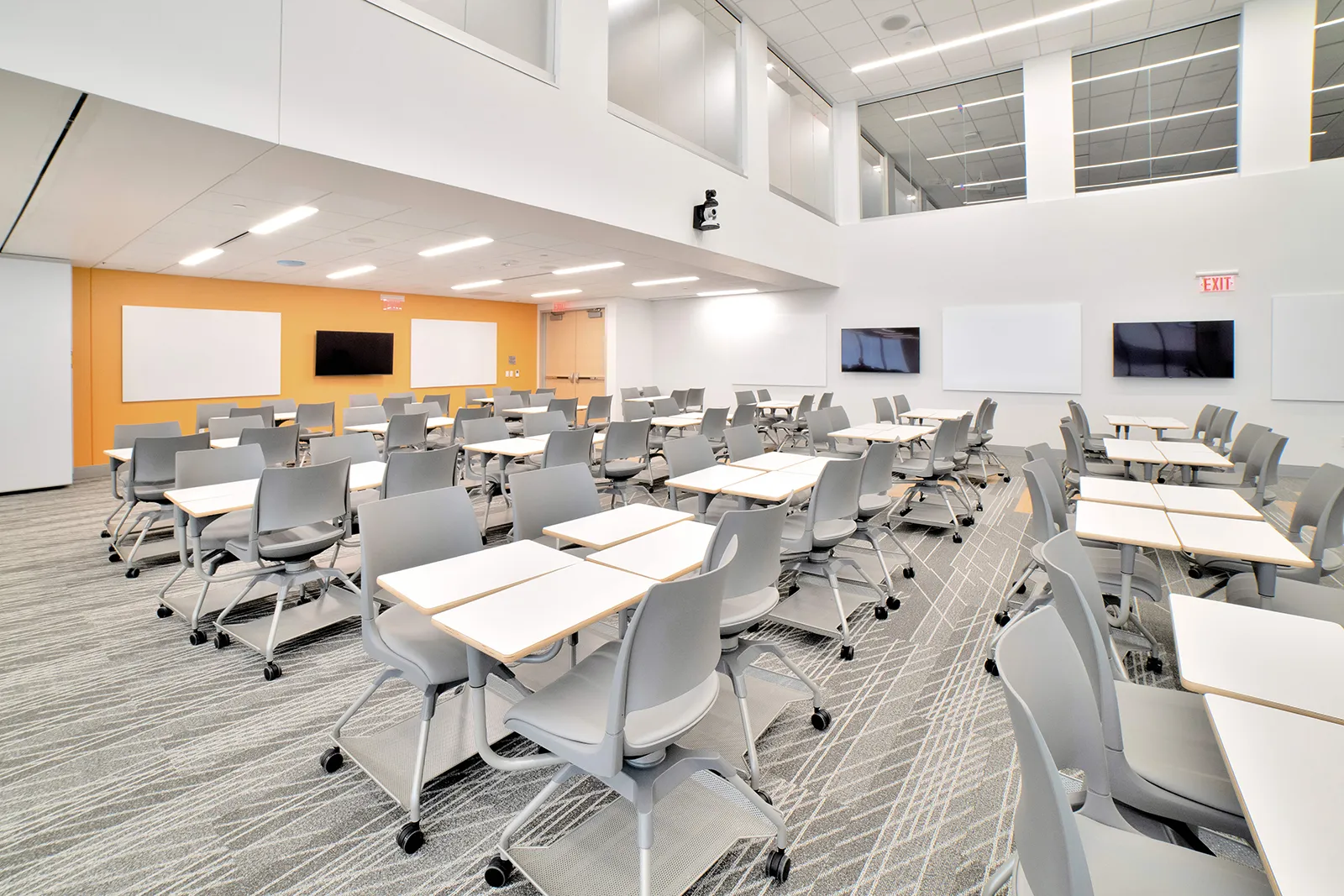
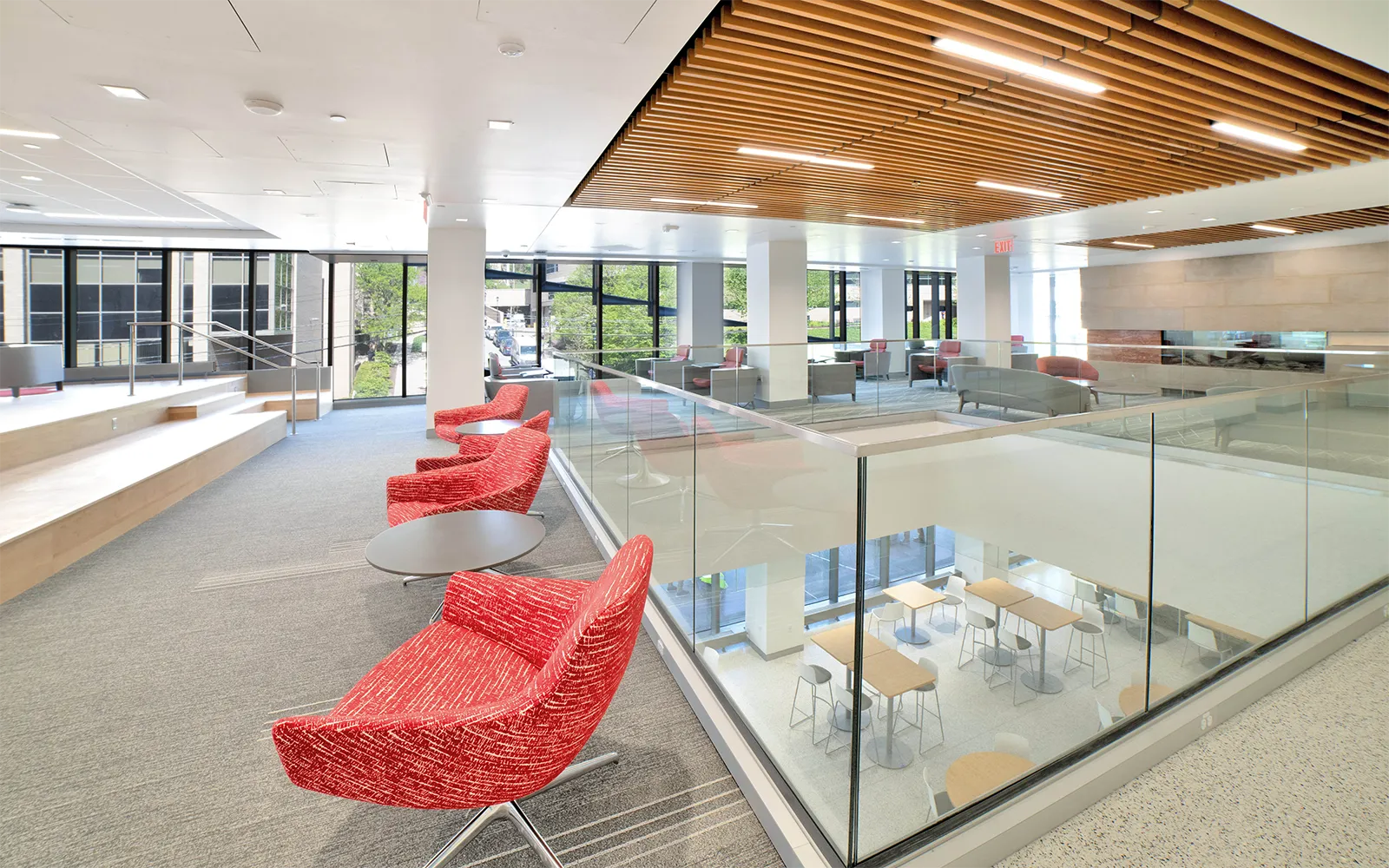
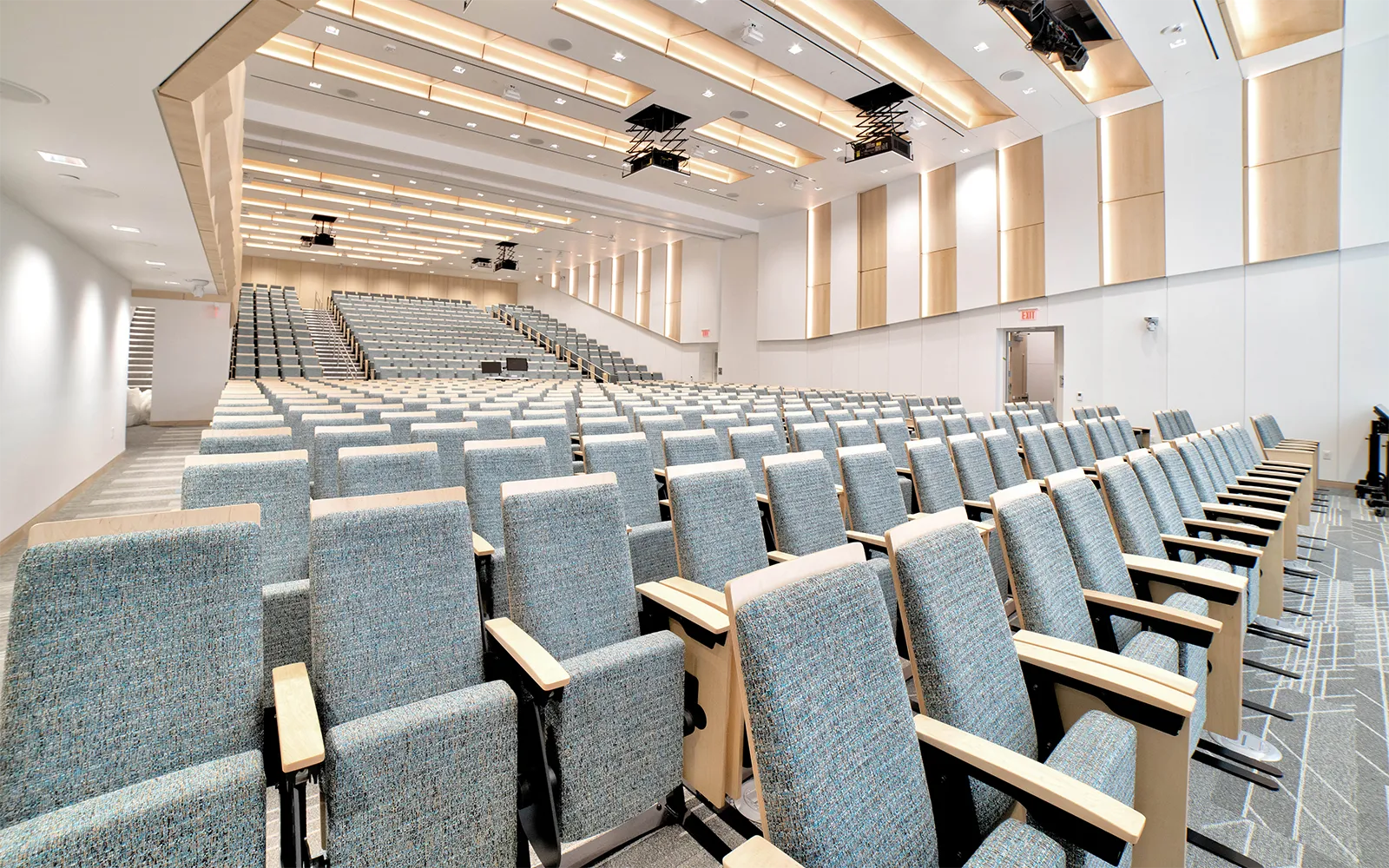
The University of Pittsburgh, in collaboration with UPMC, sought to update the Alan Magee Scaife Hall, originally constructed in 1956, to better accommodate modern medical education. The aging interior spaces no longer met the needs of contemporary learning, prompting a bold renovation project. This initiative involved replacing the building’s West Wing with a new 108,787-square-foot addition. The seven-story, plus two-story mechanical penthouse, addition features state – of – the – art classrooms, laboratories, and collaborative spaces, including a 600-seat lecture hall, a gross anatomy lab, and spaces designed for 150 students to engage in collaborative learning. A monumental staircase connects the 2M Level to the seventh floor, enhancing movement throughout the building. To meet modern mechanical, electrical, and plumbing (MEP) requirements, the structure is topped with 2 stories of mechanical rooms, which also serve portions of the original building.
The sustainable design of the University of Pittsburgh’s Scaife Hall prioritizes resource efficiency and energy conservation. Ample natural light reduces the need for artificial lighting, while an efficient building envelope, featuring an R-38 roof and R-25 walls, was designed for a low air leakage rate of 0.25 cfm. The building incorporates high-efficiency HVAC, plumbing, and electrical systems, as well as advanced energy solutions such as heat recovery via a heat wheel and Konvekta air handling units. A chilled beam system and demand control ventilation further optimize energy usage and improve indoor air quality. Throughout the project, LED lighting was installed to reduce energy consumption, and commissioning ensured peak performance of all systems.
View MoreHigher Education, Education
Pittsburgh, PA
108,787 SF